

Chat With AI Characters: A Simple Guide for Beginners

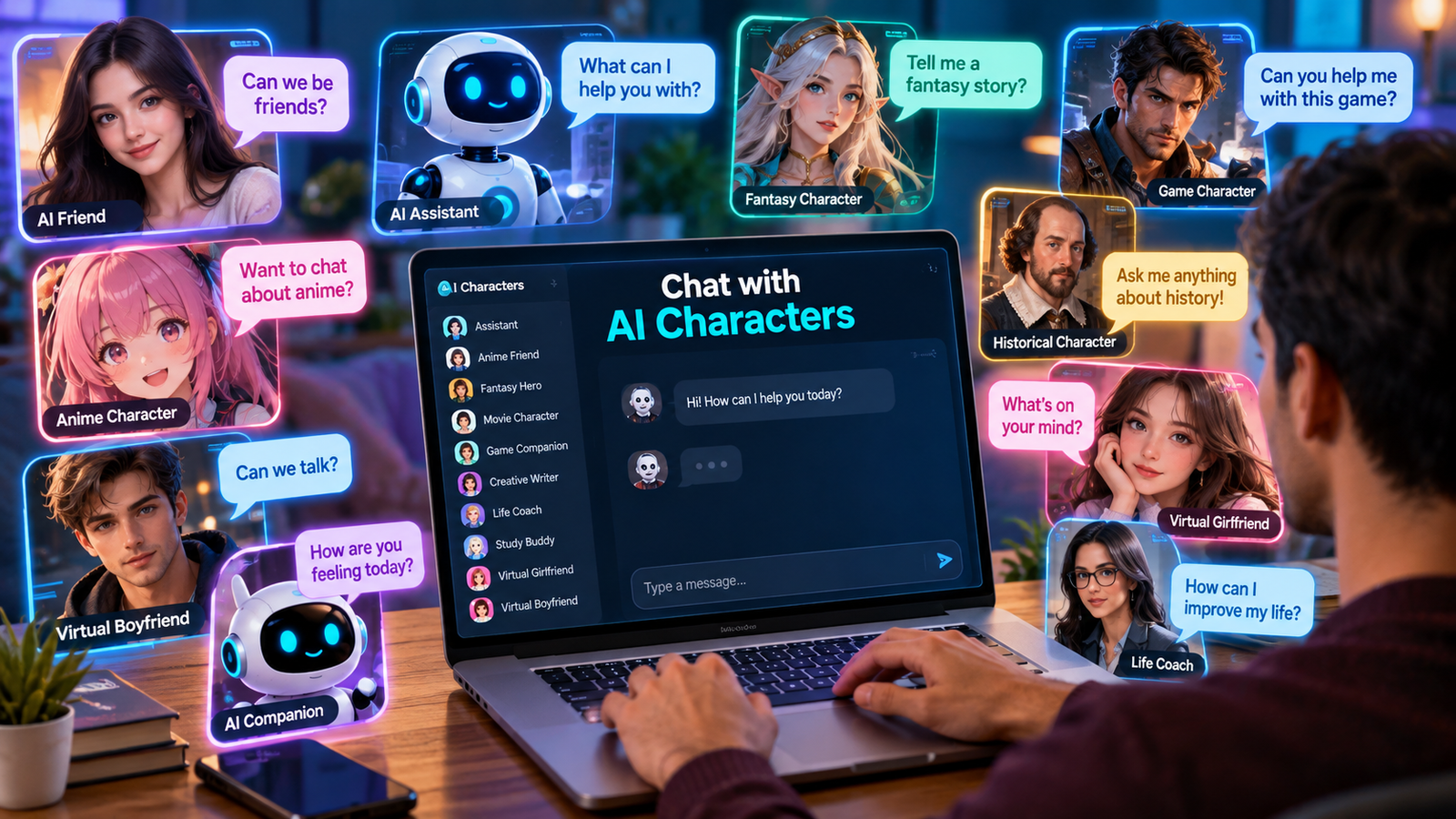
Chat with AI characters has become a popular way to enjoy interactive conversations online. Instead of talking with a standard chatbot, users can communicate with characters designed with different personalities, interests, and speaking styles. Some characters may act like fictional heroes, friendly companions, teachers, game characters, or creative roleplay partners. The experience can feel more personal because conversations are shaped around the character you choose. However, not every AI character platform works in the same way. Features, privacy rules, response quality, and customization options can vary widely. This guide explains what AI character chats are, how they work, and what users should consider before choosing one.
What Does Chat With AI Characters Mean?
To chat with AI characters means having a conversation with an artificial intelligence system that follows a particular personality or role. Instead of receiving completely general answers, the AI responds according to the character’s background, tone, interests, and instructions. For example, one character might behave like a patient teacher, while another may act like a fantasy adventure partner. This makes conversations more engaging for many users. The character does not have real feelings or personal experiences, even when its responses sound emotional. It generates replies based on patterns learned from data and the instructions provided by its creators or users.
AI character conversations can also be used for entertainment, storytelling, learning, brainstorming, and roleplay. A user might create a detective character and build a mystery story through several conversations. Another person may use a historical-style character to ask questions about a specific period. Some platforms allow users to change names, personalities, conversation rules, and backgrounds. Others provide ready-made characters that require no setup. The quality of these experiences depends on the underlying AI model and platform design. Therefore, people should focus on useful features rather than assuming every AI character will provide the same quality of conversation.
How Do AI Character Conversations Work?
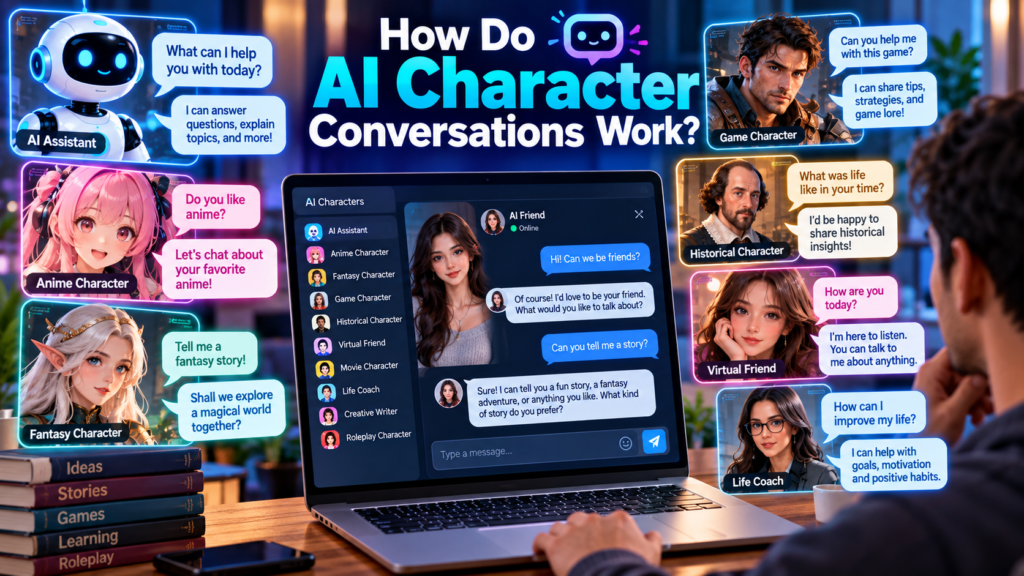
When you chat with AI characters, the system usually combines an AI language model with character instructions. These instructions may describe the character’s personality, background, communication style, interests, and boundaries. The AI then uses this information while generating each response. Previous messages may also be included as conversation context. This helps the character maintain a more consistent tone throughout the discussion. However, context can have limits. In longer conversations, an AI may forget earlier details or misunderstand information. That does not mean the character has a real memory. It simply means the system is processing available conversation context.
Many platforms also use additional settings to shape character behavior. These can include greeting messages, example conversations, personality descriptions, and response preferences. Some systems let users create their own characters from scratch. Others offer libraries containing thousands of community-created personalities. A good character setup should provide clear instructions without making the personality too complicated. Users can often improve responses by explaining the desired tone and scenario clearly. If you are interested in related technology, exploring an AI tools guide can also help you understand how different conversational systems compare and where character-based chat fits within the wider AI market.
Popular Uses for Chat With AI Characters
One reason people chat with AI characters is entertainment. Character-based conversations can support interactive stories where users influence what happens next. A fantasy character might guide someone through a fictional world, while a detective character could present clues during a mystery. These conversations can also support creative writing because users can test dialogue, develop personalities, and explore possible story scenes. Unlike traditional stories, the direction can change based on each response. This interactive quality makes AI characters interesting for people who enjoy games, storytelling, and imaginative experiments without needing complicated software.
Education is another practical use. Students can create simple characters that act like tutors, interviewers, language partners, or study assistants. For example, someone learning English could practice casual conversations with a friendly character. A history student could ask questions using a character designed around a particular historical setting. However, users should verify important facts because AI can make mistakes. AI characters are best used as learning support rather than unquestioned authorities. For more practical applications, readers may also find an AI productivity tools article useful when deciding whether conversational AI can improve studying, planning, writing, or everyday tasks.
Features to Look for in an AI Character Platform
Before choosing a service, it helps to compare its main features. A good platform should make conversations easy to start while providing enough control for users who want customization. The most useful features can differ depending on whether the goal is entertainment, education, storytelling, or general conversation. Users should also consider whether characters maintain consistent personalities and whether conversations remain understandable after many messages.
| Feature | Why It Matters |
|---|---|
| Character creation | Allows personalized personalities |
| Memory or context | Helps maintain conversation details |
| Voice support | Makes interactions more natural |
| Custom instructions | Gives users greater control |
| Character library | Provides ready-made options |
| Privacy settings | Helps protect personal information |
| Conversation history | Makes previous chats easier to revisit |
| Safety controls | Helps manage inappropriate content |
Not every platform offers all these features, and some may place advanced tools behind paid plans. A larger character library does not automatically mean better conversations. Response quality, reliability, privacy, and ease of use are equally important. Users should also check whether the service clearly explains how conversation data is stored and used. If voice features are available, consider whether recordings are retained. Similarly, character creators should understand whether their creations are public or private. Comparing these details before signing up can prevent unpleasant surprises and help users choose a platform that matches their actual needs.
Benefits of Chat With AI Characters
A major benefit of chat with AI characters is flexibility. Users can select a personality that fits their current goal or mood. Someone looking for creative inspiration can choose a storyteller, while another person may prefer a language practice partner. Conversations can happen at any convenient time without arranging a meeting with another person. AI characters can also provide repeated practice, which can be useful when someone feels uncomfortable making mistakes in front of others. For creative users, characters can help explore dialogue, scenes, conflicts, and ideas before turning them into a larger project.
Another advantage is personalization. Users can often adjust character names, personalities, backgrounds, and conversation goals. This can make an interaction feel more relevant than a generic question-and-answer chatbot. However, personalization has limits. An AI character does not actually know the user in the human sense, even when it remembers details from a conversation. It can also produce confident but incorrect information. Therefore, users should enjoy the interactive experience while maintaining realistic expectations. AI characters can be useful tools for creativity and practice, but they should not replace professional advice, trusted relationships, or reliable sources for important decisions.
Privacy and Safety When Using AI Characters
Privacy should be considered whenever you chat with AI characters online. Conversations may contain personal details, private stories, names, opinions, or other sensitive information. Before sharing anything important, users should review the platform’s privacy policy and account settings. Avoid entering passwords, financial information, private identification numbers, or confidential business information into character conversations. Even if a character appears friendly or trustworthy, it is still software. A conversational personality does not provide the same privacy expectations as a trusted human relationship. Keeping personal information limited is one of the simplest ways to reduce unnecessary privacy risks.
Safety is also important because AI characters can sometimes generate inaccurate, inappropriate, or unexpected responses. Parents and guardians should pay particular attention when younger users access conversational AI. Platform age requirements and safety controls should be checked before use. Users should also report harmful content when reporting tools are available. If an AI conversation becomes emotionally intense, it is sensible to step away and speak with a trusted person when needed. The best approach is to treat character AI as a digital tool for conversation and creativity, rather than assuming the character understands emotions, intentions, or real-world consequences like a person does.
How to Get Better Conversations From AI Characters
You can improve results when you chat with AI characters by giving clear instructions. Start by explaining the situation, desired tone, and type of response you want. For example, instead of saying “Tell me a story,” you could describe the setting, main character, mood, and preferred writing style. Clear instructions give the AI more useful context. You can also correct the character when it makes a mistake. Short corrections such as “Keep the character calm and friendly” can help guide later responses. Avoid adding too many complicated instructions because conflicting directions may make the conversation less consistent.
Another useful approach is to maintain a simple conversation goal. If you want a character to help with language practice, tell it what language level you prefer. If you are building a fictional story, provide important character details early. You can also ask the AI to summarize key facts before continuing a long conversation. This can help restore context if earlier details are forgotten. Experimenting with different prompts is normal because AI responses can vary. Over time, users usually learn which instructions produce the most useful results. Good prompts, realistic expectations, and clear boundaries generally create better conversations.
Chat With AI Characters vs Traditional Chatbots
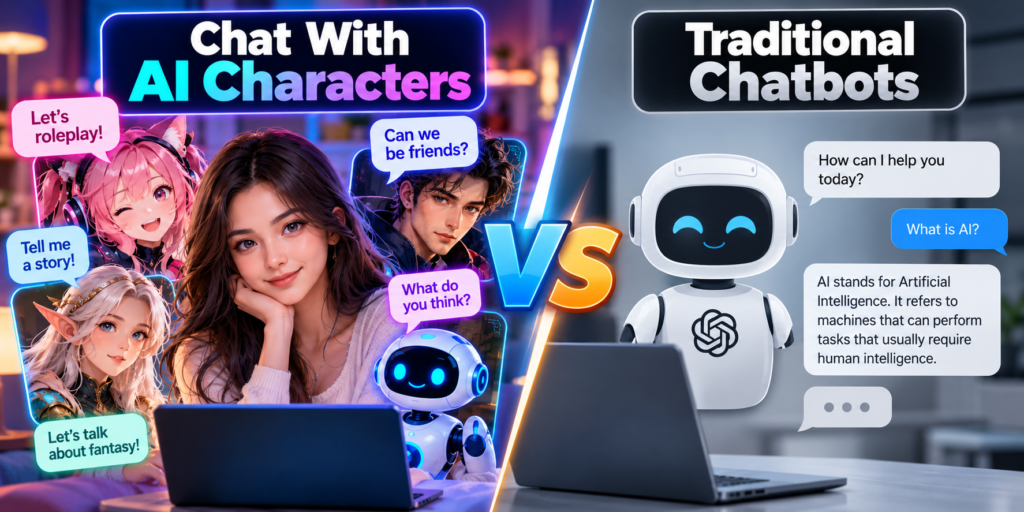
The main difference between chat with AI characters and traditional chatbot use is personalization. A traditional chatbot is usually designed to answer questions, complete tasks, or provide general assistance. An AI character focuses more strongly on personality, role, storytelling, or a particular conversational style. For example, a traditional chatbot might explain how photosynthesis works. A character chatbot could explain the same topic while acting as a friendly science teacher. Both systems can be useful, but their goals are different.
| AI Character Chat | Traditional Chatbot |
|---|---|
| Personality-focused | Task-focused |
| Often supports roleplay | Usually provides direct answers |
| May offer custom characters | Usually has one general assistant |
| Useful for storytelling | Useful for information and productivity |
| Conversation style can vary | Responses are usually practical |
| Often emphasizes interaction | Often emphasizes efficiency |
Neither approach is automatically better. The right option depends on what the user wants to accomplish. Someone creating a story may prefer a character with a strong personality. Someone looking for quick instructions may prefer a standard assistant. Some modern platforms combine both approaches by offering personality settings alongside practical tools. Understanding this difference can help users choose the right experience instead of expecting every AI system to behave like a character platform.
Choosing the Right AI Character Experience
When selecting a platform, begin with your main purpose. If entertainment is your goal, look for strong character libraries and creative roleplay features. If learning matters more, prioritize accurate responses, clear explanations, and useful customization. For private conversations, review privacy controls before creating an account. Users should also check pricing because some services offer basic conversations for free while charging for advanced models, longer context, voice features, or additional customization. A free option can be enough for casual use, while frequent users may value additional controls.
It is also worth testing several characters before deciding which platform feels best. Pay attention to response quality, personality consistency, conversation speed, and available settings. A character that looks interesting may not produce enjoyable conversations after several messages. Likewise, a simple character can become surprisingly useful when its instructions are well designed. Do not judge a platform only by marketing claims or the number of characters available. Read its terms, understand its privacy practices, and test the features you actually need. This practical approach makes it easier to find a suitable AI conversation experience.
Frequently Asked Questions
What is chat with AI characters?
Chat with AI characters means having interactive conversations with AI personalities designed around specific roles, traits, or backgrounds. Characters can support entertainment, storytelling, learning, roleplay, brainstorming, and casual conversation. Their responses are generated by artificial intelligence, so they do not possess genuine emotions, personal experiences, or human consciousness.
Are AI characters real people?
No, AI characters are not real people. They are software systems that generate responses based on AI models, character instructions, and conversation context. They may sound emotional or personal, but this does not mean they have real feelings or independent thoughts. Users should always remember this distinction during conversations.
Can I create my own AI character?
Many AI character platforms allow users to create custom characters. Depending on the service, you may be able to choose a name, personality, background, speaking style, greeting, and conversation rules. Some platforms also allow creators to keep characters private or share them with other users.
Is it safe to chat with AI characters?
AI character chats can be useful, but users should protect their privacy. Avoid sharing passwords, financial information, identification details, or highly confidential information. Check the platform’s privacy policy and safety controls before using it. Also remember that AI responses can be inaccurate, inappropriate, or misleading.
Can AI characters remember previous conversations?
Some platforms provide memory or extended conversation context, while others have limited memory. Even when memory is available, it may not work perfectly. An AI can forget information, misunderstand earlier messages, or incorrectly recall details. Users should provide important context again when accuracy matters.
Conclusion
Chat with AI characters offers an interactive way to explore entertainment, storytelling, learning, roleplay, and creative ideas. The experience can feel more engaging because characters are designed with specific personalities and conversation styles. However, users should understand that these characters are software, not real people. Response quality, memory, privacy, safety, and customization can vary between platforms. Choosing a service based on actual needs is therefore more useful than following popularity alone. Start with simple conversations, avoid sharing sensitive information, and test different characters to find what works best. With realistic expectations and responsible use, AI character conversations can become a useful and enjoyable digital experience.
[…] Who Owns Claude? The Company Behind Claude AI Chat With AI Characters: A Simple Guide for Beginners ThotChat AI: What Happened and What to Know SwitchROMs: A Safe Guide to Nintendo Switch […]