

Bill Gates: Life, Career, Wealth and Latest Work

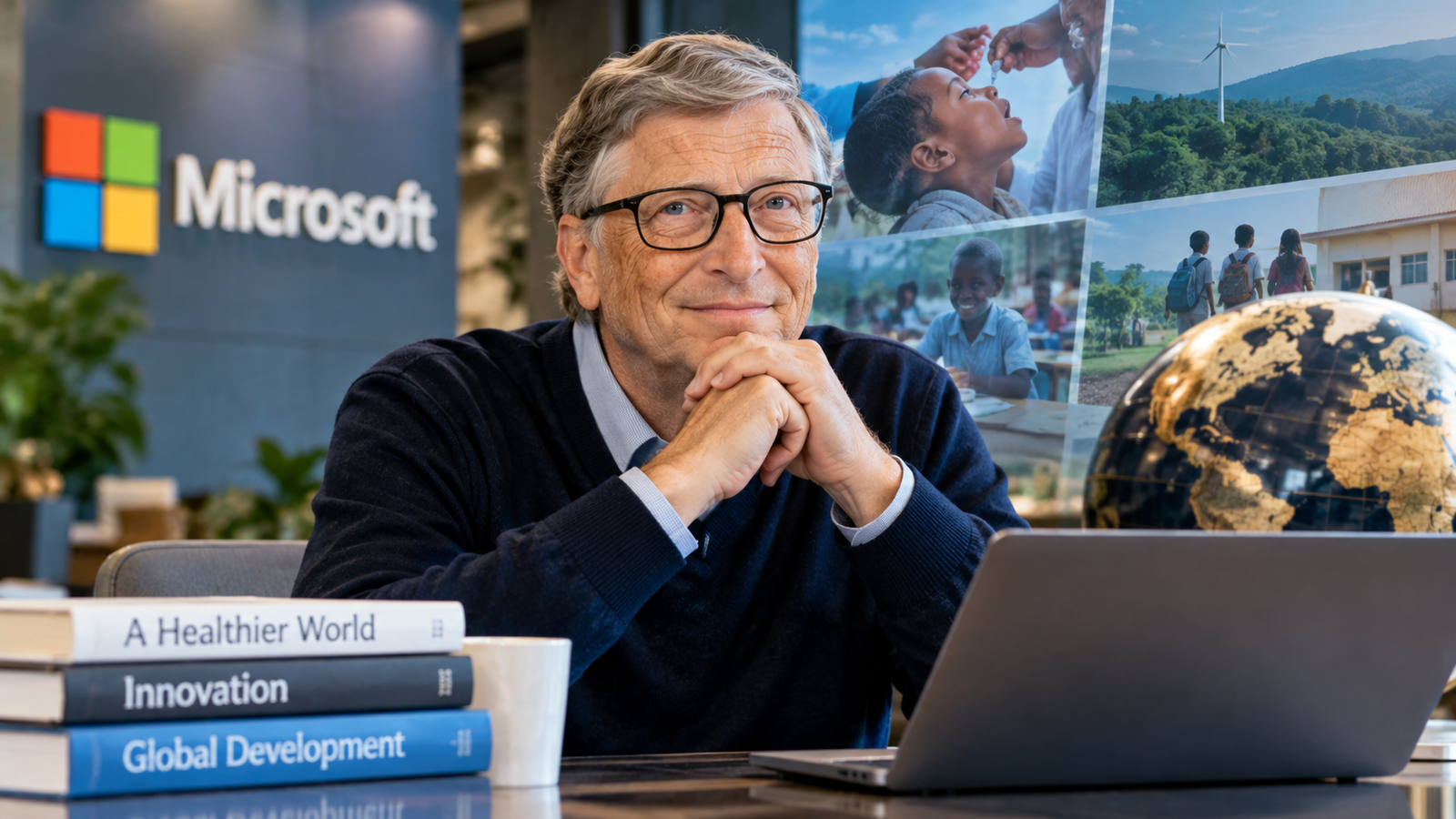
Bill Gates is an American technology entrepreneur, software pioneer, author, and philanthropist best known as the co-founder of Microsoft. He helped shape the personal computer revolution and became one of the most recognized figures in modern technology. Gates later moved much of his attention toward global health, education, poverty reduction, climate, and scientific innovation. Today, his work is closely connected with the Gates Foundation and his writing platform, Gates Notes. In 2026, artificial intelligence has also become an important part of his public work. This article explains Bill Gates’ background, Microsoft career, philanthropy, books, current projects, and latest developments in simple terms.
Bill Gates and the Early Microsoft Years
Bill Gates and Paul Allen founded Microsoft in 1975 after recognizing the potential of personal computers. Their early work focused on software for emerging computer systems, including Altair BASIC. The company eventually became a major force in personal computing as software became increasingly important to businesses and households. Gates was deeply involved in Microsoft’s technical direction and business strategy during its rapid growth. Microsoft later developed products that became widely used across personal and professional computing. The company’s history shows how software moved from a specialized field into an essential part of everyday life. Gates has described those early years in detail through his own writing and memoir.
Microsoft’s growth changed both the technology industry and Gates’ public profile. He became closely associated with the rise of desktop computing, particularly as Microsoft’s operating systems and applications reached millions of users. Gates served as Microsoft’s chief executive until 2000, when he moved away from the CEO position and became more focused on software development and other responsibilities. In 2008, he transitioned out of his daily role at Microsoft to concentrate on philanthropy. He later stepped down from Microsoft’s board in 2020 while continuing as a technology adviser for the company. His career therefore developed from software entrepreneur to technology adviser and full-time philanthropist.
Bill Gates and the Gates Foundation
The Bill & Melinda Gates Foundation became the central part of Gates’ philanthropic work. Its mission focuses on improving health, opportunity, and living conditions for people around the world. The foundation supports projects involving vaccines, infectious diseases, maternal and child health, agriculture, education, sanitation, financial systems, and other development challenges. Its work is carried out through partnerships with governments, researchers, nonprofits, and other organizations. The foundation provided billions of dollars in charitable support during 2025, supporting thousands of grants and organizations. This demonstrates the scale of its global operations and its focus on large international challenges.
Gates’ current philanthropic strategy is also shaped by a defined 2045 timeline. The foundation plans to close on December 31, 2045, after accelerating its spending during its final two decades. Its stated goals include preventing deaths of mothers and children, reducing deadly infectious diseases, and helping hundreds of millions of people escape poverty. In January 2026, the foundation announced plans for an annual payout of about $9 billion. The organization says this approach is designed to move resources more quickly toward its priorities before closure. These plans represent a significant shift from an open-ended foundation model toward a defined long-term mission.
Bill Gates and Global Health
Global health has become one of the most important areas associated with Bill Gates’ philanthropic work. The Gates Foundation supports vaccine development, immunization programs, malaria research, tuberculosis initiatives, HIV programs, maternal health, nutrition, and other health projects. Its approach combines scientific research with efforts to deliver proven solutions to communities that need them. The foundation also works with international organizations and governments rather than operating only through its own programs. This model is intended to support broader health systems and increase access to effective tools. For readers researching this subject, related topics such as global vaccine development and infectious disease prevention provide useful background.
The foundation’s recent health strategy increasingly includes artificial intelligence and digital technology. In February 2026, the Gates Foundation joined the Novo Nordisk Foundation and Wellcome in a $60 million initiative supporting locally led evaluations of AI tools in primary and community health settings. The goal is to understand which tools work, where they add value, and how they can be used responsibly. The foundation has also explored AI applications for diagnostics, health-worker support, vaccine research, and maternal care. These projects show how Gates’ technology background continues to influence his philanthropic interests, even though his main focus today is no longer running Microsoft.
Bill Gates and Artificial Intelligence in 2026
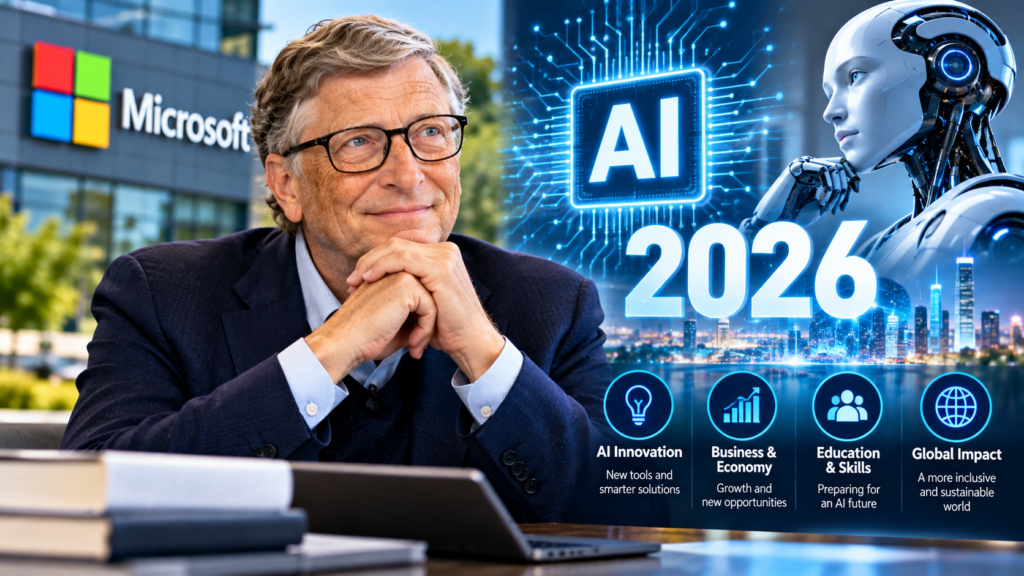
Artificial intelligence has become a major subject in Gates’ recent public writing and philanthropic activities. In 2026, he discussed the rapid development of AI and the need to make careful choices about its future. His recent work connects AI with areas such as healthcare, education, agriculture, and scientific research. Rather than treating AI only as a consumer technology, Gates has increasingly discussed its potential applications in solving practical problems. His foundation is also investing in efforts intended to make AI tools more accessible to communities that have historically had fewer resources and less access to advanced technology.
A major September 2026 development came when the Gates Foundation announced plans to spend at least $1 billion over two years on equitable AI initiatives. The announced allocation includes education, healthcare, agriculture, and digital infrastructure. The foundation said 40% would support education, another 40% healthcare, 10% agriculture, and 10% digital foundations such as datasets in languages that AI systems may not yet understand well. This is important because it shows how AI has become connected to the foundation’s broader development agenda. The focus is not simply on creating technology, but on expanding practical access and usefulness for people and communities worldwide.
Bill Gates and AI for Farmers
Agriculture is another area where Gates’ current work intersects with artificial intelligence. In September 2026, the Gates Foundation and Google announced an expanded initiative designed to bring AI resources to as many as 200 million smallholder farmers across Sub-Saharan Africa and South Asia. The initiative aims to help farmers understand climate risks, improve productivity, and strengthen resilience. The organizations said they have committed more than $100 million in combined funding and technical support. The project includes climate forecasting, agricultural information, and language tools intended to make advanced technology more useful at the farm level.
The farming initiative also reflects a broader challenge in technology: useful information is not always available in the right format. Farmers may need local weather forecasts, crop advice, language support, and information that matches their specific conditions. The Gates Foundation and Google say the program will support local researchers and innovators while keeping talent, data governance, and intellectual property connected to the regions where solutions are developed. This approach recognizes that technology works better when it responds to local needs. For people interested in AI in agriculture, the project provides a practical example of how artificial intelligence could support climate adaptation, food security, and smallholder farming.
Bill Gates’ Books and Source Code
Bill Gates has also become a widely read author. His books have covered technology, climate change, pandemics, and his personal history. His memoir, Source Code, was published in 2025 and focuses on his childhood, education, early interests, and the beginnings of Microsoft. The book gives readers a more personal account of the experiences that influenced his career. Gates has said that writing the memoir encouraged him to examine his early life and the people who shaped him. He has also written other books, including The Road Ahead, How to Avoid a Climate Disaster, and How to Prevent the Next Pandemic.
Source Code is especially useful for readers who want to understand the origins of Microsoft from Gates’ perspective. It covers his childhood in Seattle, his interest in computers, his time at Harvard, and his partnership with Paul Allen. Gates has described how a 1975 issue of Popular Electronics helped inspire the work that eventually became Microsoft. The story connects an early interest in computing with the development of Altair BASIC, Microsoft’s first product. For readers exploring his career, the memoir adds personal context to the better-known business history. It also shows how curiosity, experimentation, education, and timing influenced Gates’ path into technology.
Bill Gates’ Wealth and Philanthropic Approach
Bill Gates became extremely wealthy through Microsoft’s growth and his ownership of company shares. However, his financial position has changed significantly as he has transferred resources toward philanthropy and other investments. Exact wealth figures can change because asset values, investments, donations, and market prices change over time. For that reason, a single internet estimate should not be treated as a permanent figure. Gates himself has increasingly emphasized giving away his wealth through philanthropic efforts. His foundation’s 2045 plan is designed to accelerate that process rather than preserve the organization indefinitely. This makes his current financial story closely connected to philanthropy rather than simply personal wealth.
Gates’ philanthropic approach generally focuses on measurable problems where research, funding, partnerships, and technology can potentially produce large-scale improvements. The Gates Foundation supports areas where new ideas may involve significant risks and where governments or businesses may not always be able to experiment. Its work spans more than 130 countries through partners and grantees. The organization also publishes information about grants, program strategies, and financial support. Readers who want to explore this subject further can read related articles about Bill Gates’ philanthropy and global development initiatives. These resources can provide additional context without reducing philanthropy to a simple measure of personal wealth.
Bill Gates: Career and Impact at a Glance
The following chart provides a simple overview of the major stages in Bill Gates’ public career. It highlights how his professional focus changed over time, moving from software development and business leadership toward philanthropy, global health, climate-related work, and artificial intelligence. The dates reflect major publicly reported milestones in his career. This timeline is useful for readers who want a quick explanation rather than a long biography. It also shows why Bill Gates remains relevant to several different industries today. His influence is no longer limited to personal computing, because his current work connects technology with health, education, agriculture, climate, and economic opportunity.
| Period | Major Development |
|---|---|
| 1975 | Microsoft founded with Paul Allen |
| 1980s–1990s | Microsoft expands personal computing |
| 2000 | Gates steps down as Microsoft CEO |
| 2008 | Leaves Microsoft’s daily operations |
| 2020 | Steps down from Microsoft’s board |
| 2025 | Source Code memoir published |
| 2026 | AI becomes a major philanthropic focus |
| 2045 | Planned Gates Foundation closure |
What Is Bill Gates Doing Now?
As of September 2026, Bill Gates is primarily focused on philanthropy, writing, technology, and global challenges rather than managing Microsoft’s daily operations. His recent public work includes discussions about artificial intelligence, global health, education, climate, agriculture, and economic opportunity. Gates continues to publish ideas about technology and major social challenges. The Gates Foundation is also operating under its accelerated 2045 strategy. Current initiatives show a growing emphasis on using AI to improve access to health services, education, agricultural information, and scientific tools. His present work therefore combines his technology background with long-term philanthropic goals.
One of the clearest recent developments is the foundation’s focus on equitable AI. In September 2026, it announced at least $1 billion in planned AI-related spending over two years. The same month, its partnership with Google expanded an AI initiative targeting 200 million smallholder farmers. Earlier in 2026, the foundation also partnered with technology organizations on AI tools for health, education, and agriculture. These developments suggest that artificial intelligence is becoming an important tool across several of the foundation’s existing priorities. However, individual projects have different goals, partners, funding structures, and timelines, so they should be evaluated separately rather than treated as one single program.
Frequently Asked Questions About Bill Gates
Who is Bill Gates?
Bill Gates is an American technology entrepreneur, author, and philanthropist. He co-founded Microsoft with Paul Allen in 1975 and played a major role in the personal computer revolution. After leaving Microsoft’s daily operations, he increasingly focused on global health, education, development, climate, and philanthropy through the Gates Foundation and his personal writing.
Is Bill Gates still involved with Microsoft?
Bill Gates is no longer involved in Microsoft’s daily management. He stepped away from his daily role in 2008 and left Microsoft’s board in 2020. His current public work is primarily focused on philanthropy, technology ideas, writing, and global challenges.
What is Bill Gates doing in 2026?
In 2026, Bill Gates is focusing heavily on philanthropy, artificial intelligence, global health, education, agriculture, and economic opportunity. The Gates Foundation has announced major AI initiatives, including funding for equitable artificial intelligence applications and technology designed to support farmers.
What is Bill Gates’ foundation doing?
The Gates Foundation works on global health, development, education, gender equality, agriculture, economic opportunity, and related areas. Its 2026 strategy focuses on preventing deaths, reducing infectious diseases, and helping hundreds of millions of people escape poverty.
What is Bill Gates’ latest major project?
One of the latest major developments is the Gates Foundation’s September 2026 commitment to spend at least $1 billion over two years on equitable artificial intelligence. Another initiative with Google aims to expand AI resources to 200 million smallholder farmers.
Conclusion: Bill Gates’ Continuing Influence
Bill Gates’ career has moved through several distinct stages, from software development and Microsoft leadership to large-scale philanthropy and technology-focused global initiatives. His early work helped shape personal computing, while his later efforts have concentrated on health, education, poverty, agriculture, climate, and scientific innovation. In 2026, artificial intelligence has become an increasingly visible part of that work. The Gates Foundation’s accelerated strategy also gives his philanthropic efforts a defined endpoint in 2045. For anyone researching Bill Gates today, it is useful to look beyond his Microsoft history and understand his current projects, published ideas, and foundation priorities. His story continues to connect technology with major global challenges.
[…] Snapchat Planets: What They Mean and How They Work Bill Gates: Life, Career, Wealth and Latest Work Make AI Music: How to Create Songs With AI OurDream AI: Create Your Own AI Companion […]