

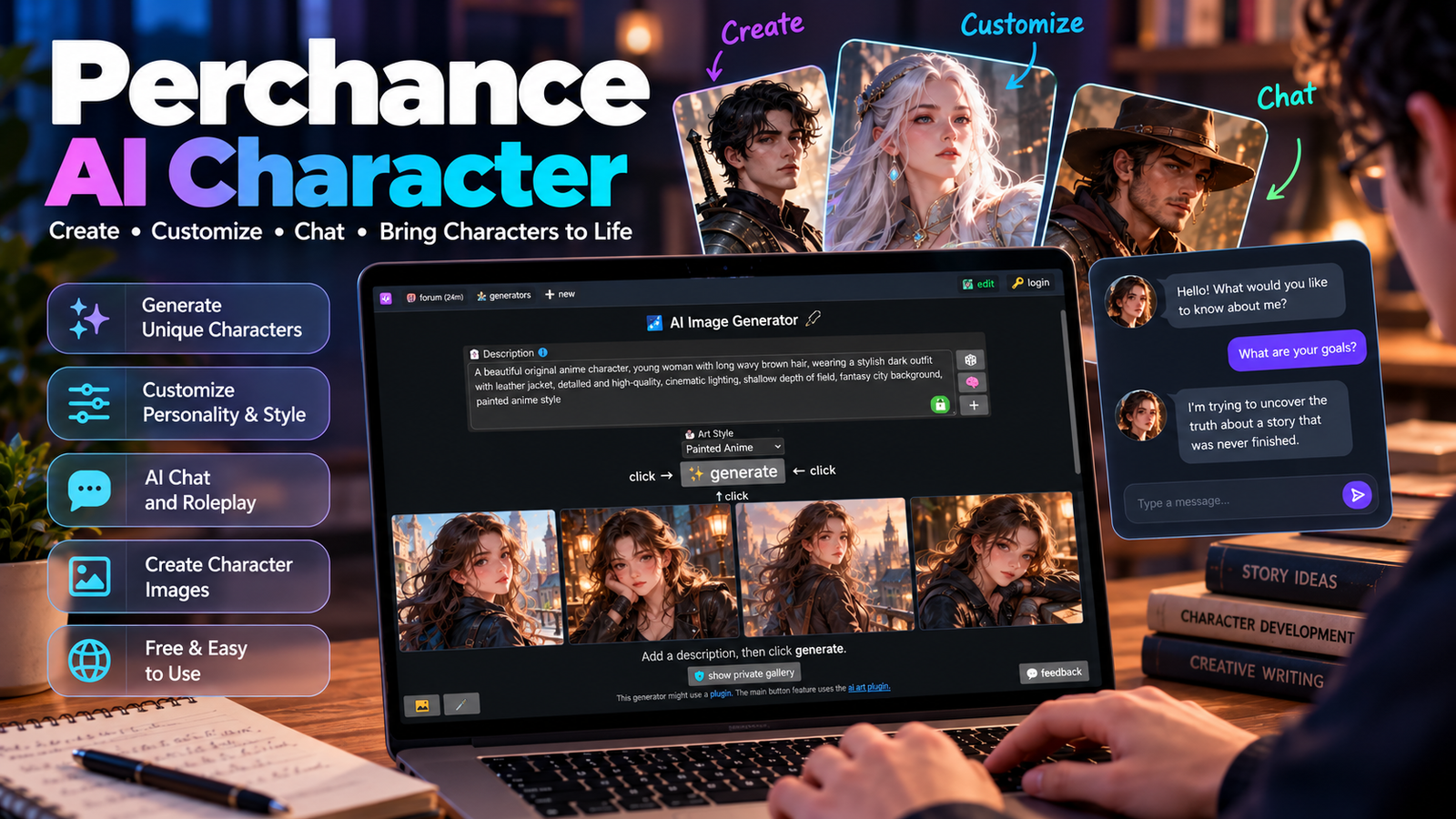
Perchance AI Character: A Complete Review of Features, Benefits, and Limitations

The Perchance AI character platform has attracted attention from people who want to create fictional personalities, develop story ideas, and experiment with AI-powered conversations without committing to an expensive subscription. Its appeal comes from a straightforward approach: users can explore character creation and interactive storytelling through browser-based tools, with no complicated setup required for many features.
However, Perchance is more than a single character generator. The broader platform hosts different generators, including tools for character descriptions, creative writing, images, and AI character chat. Understanding these differences is important because generating a fictional character, creating a portrait, and talking to an AI character are separate activities.
In this review, we examine how Perchance AI character tools work, what users can realistically expect, and where their limitations become noticeable. We also explore character customization, conversation quality, privacy considerations, practical applications, and alternative platforms. The goal is to help you decide whether Perchance is suitable for your creative projects before investing time in it.
What Is Perchance AI Character?
Perchance is a browser-based platform known for its collection of generators. These tools help users produce creative outputs, ranging from random names and character descriptions to stories and interactive conversations.
The term Perchance AI character can refer to different experiences within the platform. For example, a character generator can help develop a fictional person’s appearance or personality, while an AI character chat tool allows users to interact with a fictional personality through text.
The distinction matters because these tools do not necessarily share identical features or workflows.
How the Platform Works
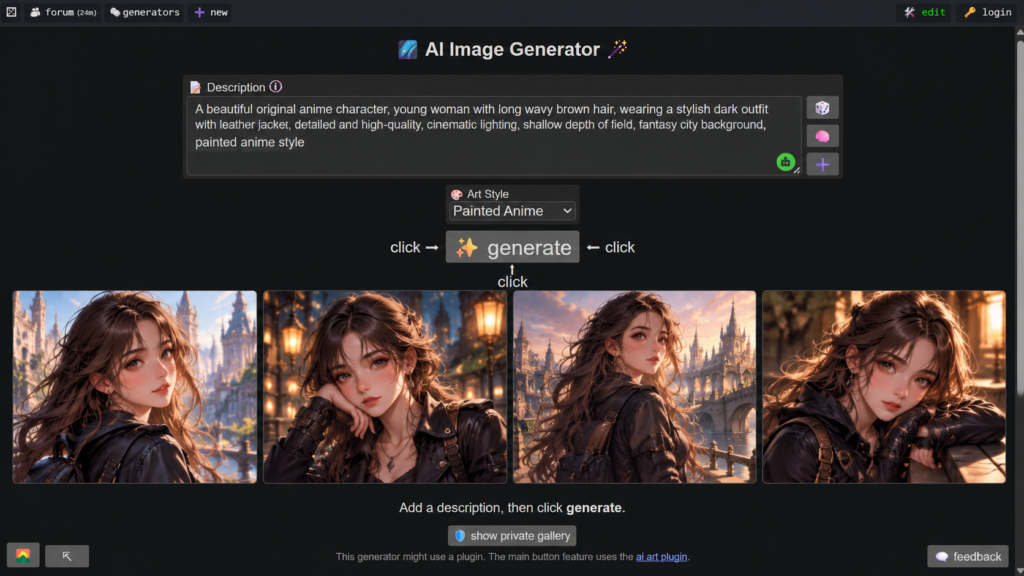
Perchance provides access to different generators through individual web pages. Depending on the tool, users can enter a description, select preferences, generate content, or customize the output.
For character-related projects, a typical workflow might involve:
- Creating a fictional character with a name and personality.
- Developing the character’s appearance, background, and motivations.
- Generating a portrait using a compatible image-generation tool.
- Using an AI character chat tool to explore conversations or roleplay.
- Copying useful results into a separate document for longer projects.
These steps may involve different generators rather than one automatic process. Users should check the features available on the particular page they are using.
You can explore the original platform through the official Perchance AI Character Chat page.
Key Features of Perchance AI Character Tools
Perchance offers several capabilities that can be useful for creative work. The exact experience depends on the generator, so it is worth examining the main functions separately.
1. Fictional Character Creation
Character creation is useful for writers, roleplayers, game enthusiasts, and anyone developing fictional personalities.
A character description can include details such as age, appearance, personality, occupation, relationships, strengths, weaknesses, and personal goals.
For example, imagine a writer developing a detective for a mystery novel. The character might be an experienced investigator who notices small details but struggles to trust other people. That combination creates opportunities for both plot development and believable dialogue.
AI-generated descriptions can provide a starting point, but they should not be treated as finished character development. The writer still needs to check whether the personality, motivations, and background fit the story.
2. AI Character Chat and Roleplay
Character chat allows users to exchange messages with an AI-generated or user-defined fictional personality.
Instead of receiving a single description, users can explore how a character might respond to questions, conflicts, or changing situations.
For example, a fantasy writer could create a fictional village guardian who distrusts strangers. During a roleplay session, the writer could introduce a traveler seeking shelter and see how the guardian responds.
This process can help generate dialogue, reveal potential conflicts, and test different story directions.
However, AI conversations are not perfectly consistent. A character might forget earlier details, repeat phrases, or respond in ways that contradict its established personality. Clear instructions and occasional reminders can improve the experience.
3. Character Images and Visual Inspiration
Some Perchance generators support AI image creation. These tools can help users visualize fictional characters before incorporating them into a story, game concept, or creative project.
A useful prompt might describe a middle-aged detective with a weathered face, a dark wool coat, tired eyes, and a rain-soaked city in the background.
Specific descriptions generally provide clearer creative direction than short prompts such as “make a detective.”
Users should also understand the difference between a character image generator and a character chat tool. Generating a portrait does not automatically mean that every character conversation will preserve the same appearance or visual identity.
4. Browser-Based Access
One of Perchance’s practical advantages is that many of its generators can be accessed directly through a web browser.
Users do not necessarily need to install desktop software or complete a lengthy registration process before trying a generator. This makes experimentation relatively convenient for beginners.
The experience can still vary between individual tools. Some functions may have different requirements, and availability or performance can change over time.
How Does Perchance AI Character Work?
Perchance AI character tools generally rely on user input to produce descriptions, creative content, or conversational responses. The technical process depends on the particular generator.
AI chat tools commonly use generative language models, which produce text based on the conversation and instructions supplied to them. These models learn patterns from training data and use those patterns to generate responses.
They do not think about fictional characters in exactly the same way a human writer does.
Understanding Character Prompts
A character prompt establishes the basic information that guides the AI’s responses.
A useful prompt usually contains four elements:
- Identity: Who is the character?
- Personality: What are the character’s main traits?
- Background: What experiences shaped the character?
- Behavior: How should the character speak and react?
Consider this hypothetical example:
Character: Evelyn Hart, a retired investigative journalist.
Personality: Curious, observant, independent, and occasionally impatient.
Background: She spent decades investigating political corruption and now lives in a quiet coastal town.
Behavior: She asks precise questions, notices inconsistencies, and avoids revealing everything she knows immediately.
This description gives the AI more useful guidance than simply asking it to create a mysterious journalist.
However, a detailed prompt does not guarantee consistent behavior. The model may still overlook instructions or introduce details that were never established.
Why Conversations Sometimes Lose Continuity
AI character chats can struggle to maintain information across long conversations.
A language model processes available conversational context when generating a response. Depending on the tool’s implementation, older messages may become less influential or fall outside the context available for a particular response.
This can cause a character to forget a name, change its opinion unexpectedly, or contradict an earlier event.
A practical solution is to maintain a short character reference containing important facts, relationships, goals, and previous events. If the tool supports reminders or memory features, these can also help preserve continuity.
For writers developing long stories, keeping an independent record is more reliable than assuming the AI will remember every detail indefinitely.
Is Perchance AI Character Free to Use?
Cost is one of the main reasons users explore Perchance.
The original Perchance AI Character Chat page advertises free access without requiring users to sign up. However, individual tools and related websites can have different terms, features, and access conditions.
It is important to distinguish the original Perchance platform from other websites that use similar names.
What Should Users Expect?
For someone exploring basic character creation or casual roleplay, the absence of an upfront subscription can make Perchance an attractive starting point.
Potential advantages include:
- Trying supported generators without a paid subscription.
- Experimenting with different character ideas.
- Creating fictional descriptions for writing projects.
- Exploring interactive conversations through a browser.
Free access does not guarantee uninterrupted service, identical capabilities across all generators, or permanent storage of creative work.
Performance can also depend on demand and the particular tool being used.
Before relying on any generator for an important project, check its current interface, usage conditions, and available saving options.
Advantages of Perchance AI Character
Perchance has several strengths that make it useful for casual creative work and early-stage character development.
Easy Access for Beginners
The browser-based approach lowers the barrier to experimentation. Users can explore a character generator without first learning advanced AI techniques or configuring a complicated software environment.
This is particularly useful for students, hobby writers, and people who are simply curious about AI-assisted storytelling.
Flexible Creative Exploration
Character creation does not have to follow a fixed formula. Users can experiment with different personalities, fictional settings, relationships, and dialogue styles.
For instance, a writer might test three versions of the same character: one who is cautious, one who is impulsive, and one who hides their emotions behind humor.
Comparing these variations can help the writer discover which personality works best for the story.
Useful for Brainstorming
Perchance can help overcome the blank-page problem.
A writer who has a setting but no central character can use a generator to explore possible protagonists. A game designer can brainstorm fictional shopkeepers, guards, or supporting characters.
The generated material can then be edited, combined, or discarded as needed.
No Need for Advanced Prompt Engineering
Basic character generation generally does not require programming knowledge.
Users can begin with ordinary language and gradually make their instructions more specific as they learn which descriptions produce useful results.
This makes the platform approachable for people who are new to generative AI.
Limitations and Potential Drawbacks
Although Perchance can be useful, it is not a complete replacement for professional writing tools or dedicated character-development software.
Character Consistency Can Be Unreliable
A character may behave differently from one conversation to another. Personality traits can become less noticeable as the conversation develops, particularly when the instructions are vague or the interaction becomes lengthy.
Writers should review important dialogue rather than assuming every response fits the character.
Results May Require Editing
Generated descriptions can contain familiar character tropes, unnecessary details, or contradictory traits.
For example, an AI might describe someone as deeply introverted and then repeatedly portray that person as comfortable sharing private information with strangers.
Such contradictions are not necessarily difficult to correct, but they require human judgment.
Privacy Requires Careful Consideration
A tool that does not require registration is not automatically private in every respect.
The data practices of the specific generator, its underlying services, and its browser-storage behavior all matter. Users should read the applicable privacy information rather than assuming that anonymous access means no information is processed or retained.
Avoid entering passwords, financial information, confidential business material, private messages, or other sensitive personal information into character chats.
If a tool stores conversations locally in the browser, clearing site data or changing devices may also affect access to saved work. Exporting or copying important material is a sensible precaution.
Not Designed for Every Professional Workflow
Perchance may be sufficient for brainstorming and casual roleplay, but projects requiring structured collaboration, version control, predictable output, or advanced integrations may need additional software.
For example, a game studio managing hundreds of interconnected characters would benefit from a dedicated content database and review process rather than relying entirely on individual AI conversations.
Perchance AI Character vs. Other AI Character Tools
Perchance is not the only option for creating fictional personalities or interactive conversations. The best alternative depends on whether the priority is storytelling, character discovery, image generation, or structured writing.
| Platform | Main Purpose | Best For | Important Consideration |
|---|---|---|---|
| Perchance | Creative generators and character chat | Casual experimentation and brainstorming | Features vary between generators |
| Character.AI | Interactive character conversations | Roleplay and character discovery | Check current access and content policies |
| JanitorAI | Character-based chat experiences | Users exploring customizable roleplay | Features and requirements may change |
| ChatGPT | General-purpose AI conversations and creative writing | Developing characters, dialogue, and story outlines | Results depend on instructions and available features |
| NovelAI | AI-assisted fiction writing and related creative tools | Writers developing longer fictional works | Check current plans and included capabilities |
These platforms serve overlapping but different needs. The table is a functional comparison, not a claim that every service provides identical features or has been tested under controlled conditions.
Which Alternative Should You Choose?
Choose Perchance if you want to experiment with character ideas and interactive conversations without a complicated setup.
Consider Character.AI if discovering and interacting with a broad selection of fictional personalities is your main interest.
Explore JanitorAI if its current character-chat features and access requirements suit your preferred roleplay experience.
Consider ChatGPT if you want help developing consistent character profiles, improving dialogue, planning story arcs, or reviewing fictional material.
NovelAI may be worth investigating if your primary goal is AI-assisted fiction writing.
Before choosing an alternative, compare its current pricing, privacy practices, content rules, memory capabilities, and export options.
Practical Tips for Getting Better Results
The quality of an AI-generated character depends partly on the instructions you provide and how carefully you review the output.
You do not need an elaborate prompt to get started. A clear description of the character’s role, personality, motivations, and behavior is often a better starting point than a long list of unrelated adjectives.
Give the Character a Clear Motivation
A character becomes more interesting when they want something specific.
Instead of describing someone as simply brave, explain what they are trying to achieve and what they fear losing.
For example, a young explorer might want to discover a lost city because their grandmother spent her life searching for it. However, the explorer may also fear repeating the mistakes that destroyed the previous expedition.
This creates a foundation for meaningful dialogue and conflict.
Establish Behavioral Boundaries
Tell the AI what the character should and should not do.
For example, a reserved character might speak in short sentences, avoid revealing personal information immediately, and ask questions before trusting strangers.
These instructions help establish a recognizable voice, although they cannot guarantee perfect consistency.
Keep a Character Reference Document
Save essential information outside the chat.
Include:
- Name, age, and background.
- Personality traits and motivations.
- Important relationships.
- Key events that have already happened.
- Speech patterns and behavioral boundaries.
This document can serve as a reference when starting a new conversation or revising a character later.
Edit the Output Before Publishing
AI-generated content should be reviewed before it becomes part of a published story, game, or commercial project.
Check for inconsistencies, clichés, factual errors, accidental similarities to existing characters, and language that does not match your intended style.
If the work will be published commercially, also review the relevant platform terms and any applicable copyright or intellectual property considerations.
Who Should Use Perchance AI Character?
Perchance is most useful for people who want a convenient way to experiment with fictional personalities and creative ideas.
Writers and authors can use character generators to explore backstories, motivations, and possible dialogue.
Roleplay enthusiasts can experiment with fictional situations and different character behaviors.
Game designers can brainstorm preliminary concepts for non-player characters, fictional locations, and supporting roles.
Students can use character creation as a creative exercise or explore how dialogue changes when a character has different motivations.
Content creators can develop fictional personalities for stories, creative projects, and other original content.
However, anyone working on a large project should keep independent records and review generated material carefully. AI tools can speed up brainstorming, but they do not remove the need for planning, editing, or creative judgment.
Frequently Asked Questions
1. What is Perchance AI character?
Perchance AI character refers to character creation and interactive character-chat tools available through the Perchance platform. The exact features depend on the generator.
2. Is Perchance AI character free?
The original Perchance AI Character Chat page advertises free access without registration. Check the specific tool for its current availability and conditions.
3. Can I create my own AI character on Perchance?
Yes, character-related generators can help you develop fictional personalities. Available customization options vary between character creation and chat tools.
4. Does Perchance AI character generate images?
Some Perchance generators support AI image creation. However, image generation and character chat are separate functions, and not every tool offers both.
5. Is Perchance AI character safe?
Safety depends on the specific tool, its privacy practices, and how you use it. Avoid sharing sensitive information and review the applicable terms before using the service.
6. Can I use Perchance AI characters for storytelling?
Yes. They can help with character concepts, dialogue experiments, and roleplay. Review the results for consistency and originality before including them in a finished story.
7. Does Perchance AI character remember previous conversations?
Memory and conversation persistence depend on the specific tool and its settings. Do not assume that every character will remember earlier conversations or retain information indefinitely.
Conclusion
Perchance AI character tools offer a convenient starting point for anyone interested in fictional character creation, brainstorming, and interactive storytelling. Their accessibility makes them particularly appealing to beginners who want to experiment without committing to a complicated setup or paid subscription.
However, convenience should not be confused with professional-grade consistency. Generated personalities may change, conversations can lose important details, and creative outputs often require editing. Privacy and data retention also deserve attention, especially when using browser-based tools without a conventional account.
The best way to evaluate Perchance is to try a specific character generator with a clear creative goal. Test its output, check its limitations, and save anything worth keeping. For casual experimentation and early-stage ideas, it can be useful. For long stories or complex projects, combine it with independent notes, careful editing, and a workflow that keeps your creative decisions under your control.