

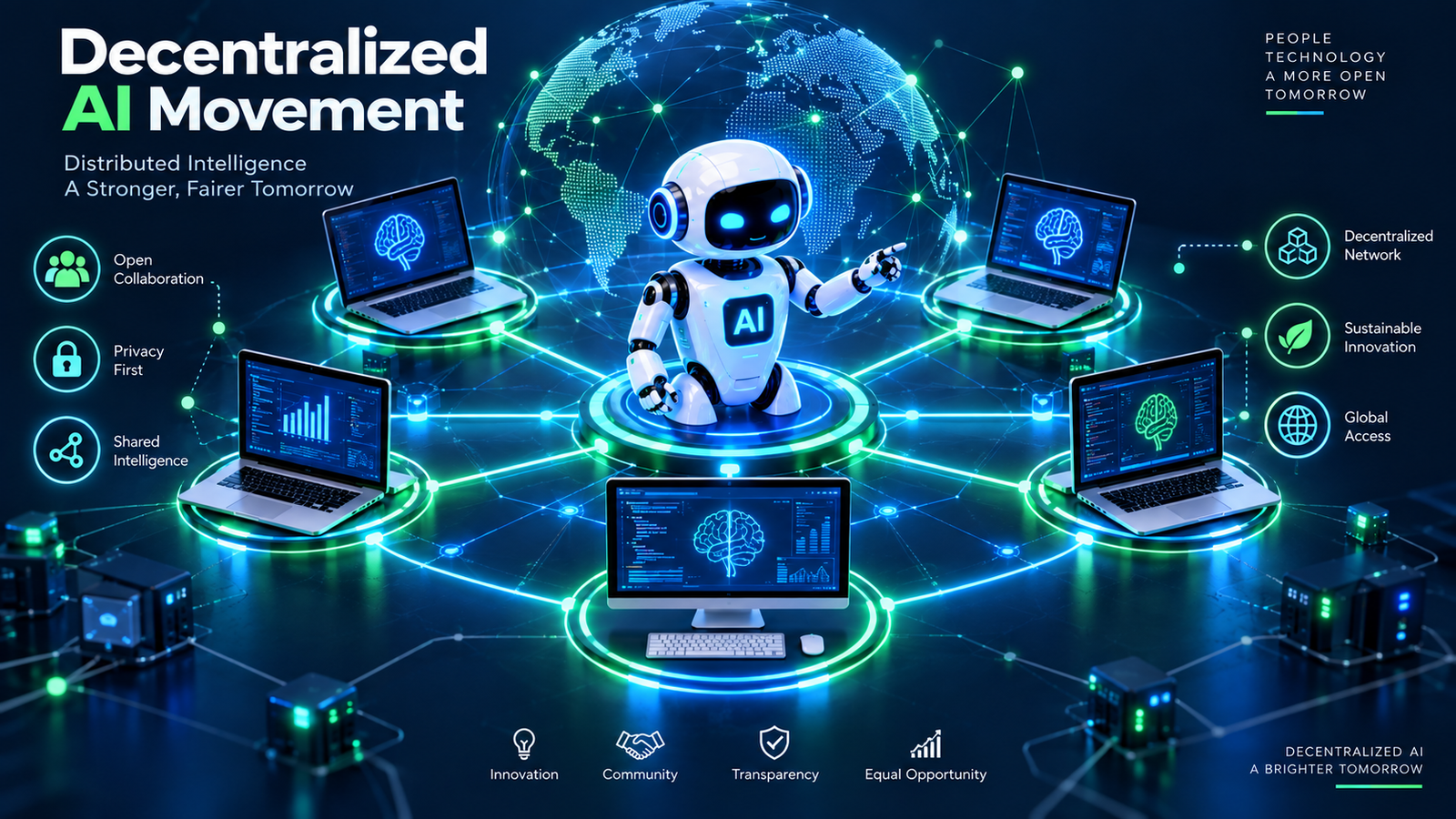
Decentralized AI Movement: The Future of Artificial Intelligence

The decentralized AI movement is changing how people think about artificial intelligence. Instead of relying entirely on a few large companies, this approach explores AI systems that share control across many participants. Developers, researchers, businesses, and everyday users can contribute to building more open and distributed technology. The goal is to make AI more accessible, transparent, and flexible. However, decentralization does not automatically solve every problem. Data quality, security, computing costs, and governance still matter. This guide explains what the decentralized AI movement means, how it works, where it is useful, and what challenges it must overcome.
What Is the Decentralized AI Movement?
The decentralized AI movement describes efforts to distribute AI development, computing, data, and decision-making across multiple participants. Traditional AI services often depend on centralized companies that control infrastructure, models, and user access. Decentralized systems explore alternatives that reduce dependence on a single provider. These alternatives may use distributed networks, open-source models, blockchain technology, or peer-to-peer computing. Not every decentralized AI project uses all these technologies. The central idea is shared participation rather than complete control by one organization. This approach can support greater choice, although its practical benefits depend on how each system is designed.
Another important part of this movement is community involvement. Independent developers can contribute code, researchers can improve models, and organizations can provide computing resources. Some projects allow users to run AI models on their own computers instead of sending every request to a remote server. Others connect different machines to support training or inference. These arrangements can create new opportunities for innovation. They can also introduce technical difficulties, including unreliable hardware, inconsistent performance, and complicated coordination. Understanding these trade-offs helps readers distinguish genuine decentralized AI projects from simple marketing claims.
How Does Decentralized AI Work?
Decentralized AI can use several different technical approaches. Distributed computing connects computers in different locations to perform AI tasks. Federated learning allows multiple organizations to train a shared model while keeping much of their data locally. Blockchain networks may help record contributions, manage transactions, or coordinate participants. Peer-to-peer systems can distribute model files and computing resources. These methods solve different problems, so they should not be treated as identical. A project may use one approach or combine several. The right design depends on its goals, available resources, and privacy requirements.
A simple example involves several hospitals working together on an AI research project. Each hospital may keep patient records on its own systems while training a shared model locally. Instead of sending all raw records to one central database, participating hospitals can exchange model updates. The shared model may improve through collaboration, although privacy risks still require careful protection. This example shows how decentralized AI can support cooperation without demanding complete data centralization. It also demonstrates why technical safeguards, clear agreements, and reliable evaluation remain essential for responsible deployment.
Why Is the Decentralized AI Movement Growing?
Interest in decentralized AI has increased because many people want more choice over how artificial intelligence is developed and used. Large AI systems often require expensive computing infrastructure, specialized hardware, and extensive data resources. These requirements can create barriers for smaller companies, universities, and independent developers. Decentralized approaches explore ways to share resources and reduce dependence on a limited number of providers. Open-source AI models have also made experimentation easier for many users. However, open access does not always mean equal access, because advanced hardware and technical knowledge can still be expensive.
Privacy is another reason people explore decentralized AI. Users may prefer systems that process information locally or keep sensitive data within their own organization. For example, a company might use a local language model to summarize internal documents without sending them to an external service. This can reduce certain data-sharing risks, but it does not guarantee complete privacy. Local systems still need access controls, secure storage, and careful monitoring. The decentralized AI movement therefore combines technological independence with a broader discussion about data ownership, user control, and responsible AI development.
Benefits of Decentralized AI
One potential benefit of decentralized AI is greater flexibility. Businesses and developers may have more options for selecting models, infrastructure, and service providers. Open-source systems can allow users to inspect code, adapt models, and build specialized applications. Distributed computing may also help organizations share available hardware rather than relying on one large data center. These advantages can support experimentation and reduce dependence on a single platform. Still, the actual savings and performance improvements vary. Building and maintaining distributed systems can require significant technical work, especially when participants have different hardware and network conditions.
Decentralized AI may also support broader participation in AI development. Universities, smaller businesses, and independent researchers can contribute ideas without needing to control a large company. Some networks reward participants for providing computing power, data contributions, or model improvements. These arrangements can create new economic opportunities. However, reward systems must be designed carefully to discourage false contributions and unfair concentration of power. A network that claims to be decentralized may still depend heavily on a small group of operators. Transparent rules and measurable participation are important when evaluating its real benefits.
Challenges Facing the Decentralized AI Movement
The decentralized AI movement faces several practical challenges. Training advanced models requires large amounts of computing power, memory, electricity, and high-speed data transfer. Distributing these tasks across many machines can make coordination more difficult. Hardware differences may affect performance, while unreliable connections can interrupt workloads. Data privacy is another concern, particularly when participants exchange model updates or use sensitive information. Security risks can include malicious participants, manipulated data, and unauthorized access. These problems do not make decentralized AI impossible, but they require strong engineering, testing, and governance.
Another challenge involves accountability. In a centralized system, users may know which company operates the service and handles support. A decentralized network can involve many developers, infrastructure providers, token holders, and independent operators. When something goes wrong, responsibility may be harder to identify. Legal requirements can also differ between countries and industries. Organizations using decentralized AI must consider data protection, intellectual property, consumer safety, and sector-specific rules. Clear documentation can help users understand who controls the system, how decisions are made, and what protections are available when problems occur.
Real-World Uses of Decentralized AI
Decentralized AI can support several practical applications. In healthcare research, institutions may collaborate on machine learning while keeping sensitive records under local control. In finance, organizations can explore shared fraud detection models without combining every customer database. In manufacturing, connected devices may analyze equipment data locally and share useful insights with other machines. These examples depend on suitable privacy protections and reliable network design. Decentralized AI is not automatically appropriate for every situation. Organizations should evaluate whether distributed processing offers meaningful benefits compared with a carefully managed centralized system.
Another possible use involves AI assistants and personal computing. A user may run a smaller language model on a laptop or private server instead of sending all requests to a cloud provider. This approach can improve control over local documents and reduce dependence on internet access. Performance depends on the computer’s hardware and the model’s size. Some users may prefer a hybrid setup that combines local processing with cloud services. This can provide convenience while keeping selected tasks private. The best choice depends on the information being handled, available resources, and the user’s technical requirements.
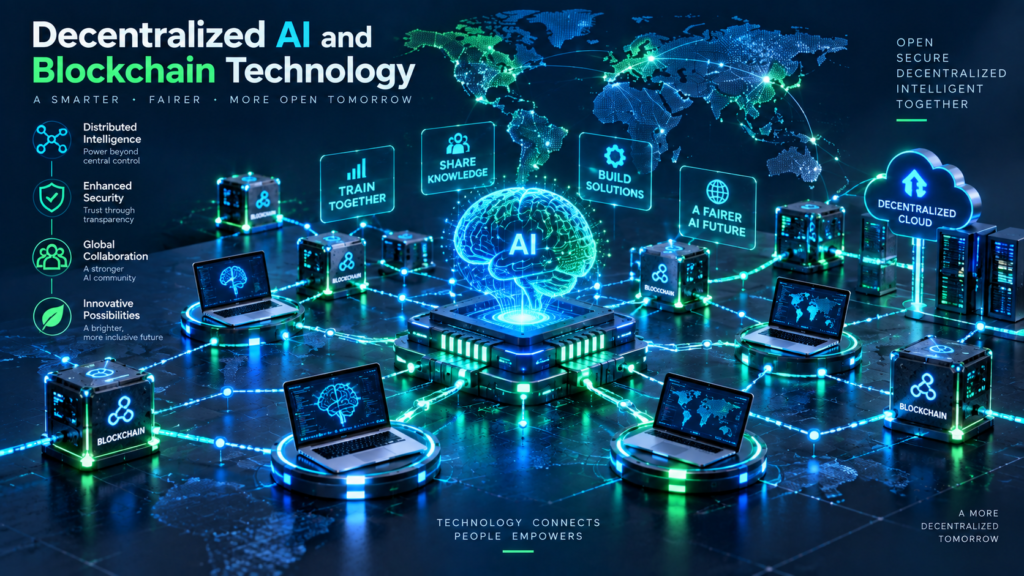
Decentralized AI and Blockchain Technology
Blockchain is often discussed alongside the decentralized AI movement, but the two technologies are not the same. Blockchain is a system for recording information across a distributed network. It can help manage digital transactions, track contributions, or coordinate participants through smart contracts. AI, by contrast, focuses on tasks such as prediction, language processing, and pattern recognition. A decentralized AI project may use blockchain for coordination without using it to run the AI model itself. Understanding this distinction helps readers avoid confusing a blockchain-based project with a fully distributed AI system.
Some projects explore token-based incentives for sharing computing resources or supporting AI development. Participants may receive digital rewards for providing hardware, completing tasks, or contributing useful model improvements. These systems can encourage cooperation, but they also introduce financial and governance questions. Token prices may change, reward rules may be complex, and participation may become concentrated among wealthy operators. A blockchain-based AI project should therefore be evaluated by its actual technology, performance, and transparency. The presence of a token alone does not prove that a system is useful or meaningfully decentralized.
Decentralized AI vs. Centralized AI
Centralized AI typically relies on infrastructure controlled by one company or organization. This model can provide consistent performance, professional support, and straightforward management. It may also require users to trust the provider with their data and depend on its pricing and service policies. Decentralized AI explores a different arrangement by distributing control or resources across multiple participants. This can increase flexibility and reduce reliance on one provider. However, distributed systems may be harder to manage and may not always match centralized services in speed, reliability, or ease of use.
| Feature | Centralized AI | Decentralized AI |
|---|---|---|
| Control | Usually held by one provider | Shared across participants |
| Computing | Central infrastructure | Distributed resources |
| Data handling | Often managed by provider | May support local processing |
| Customization | Depends on provider access | Often supports open participation |
| Performance | Usually consistent | Depends on network conditions |
| Governance | Provider-led decisions | May involve community rules |
This comparison shows that both approaches have practical strengths. Centralized AI can be useful when organizations need predictable performance, simple administration, and established support. Decentralized AI may appeal to users who value openness, local control, or shared infrastructure. The decision depends on the task, budget, privacy needs, and technical resources. For example, a small business may use a cloud AI service for customer support while running a local model for internal documents. A hybrid strategy can combine the advantages of both approaches without requiring complete decentralization.
How to Evaluate a Decentralized AI Project
Evaluating a decentralized AI project requires more than reading its website or checking whether it uses blockchain. Start by identifying what is actually distributed. Is the model open source? Are computing resources shared? Can users run the system independently? Who controls the network? These questions reveal whether decentralization is a core feature or simply a promotional term. Documentation, technical reports, and public code can provide useful evidence. Users should also examine how the project handles security, updates, governance, and disputes. Clear answers are important when choosing technology for real business or personal use.
Performance testing is equally important. A project may claim to offer low costs, strong privacy, or high speed, but those claims should be supported by measurable results. Look for information about model quality, response times, hardware requirements, and network reliability. Check whether independent users can reproduce the reported results. Also consider the total cost of operation, including electricity, maintenance, storage, and technical support. A system that appears inexpensive at first may require substantial resources later. Practical testing helps organizations choose solutions based on evidence rather than exaggerated promises.
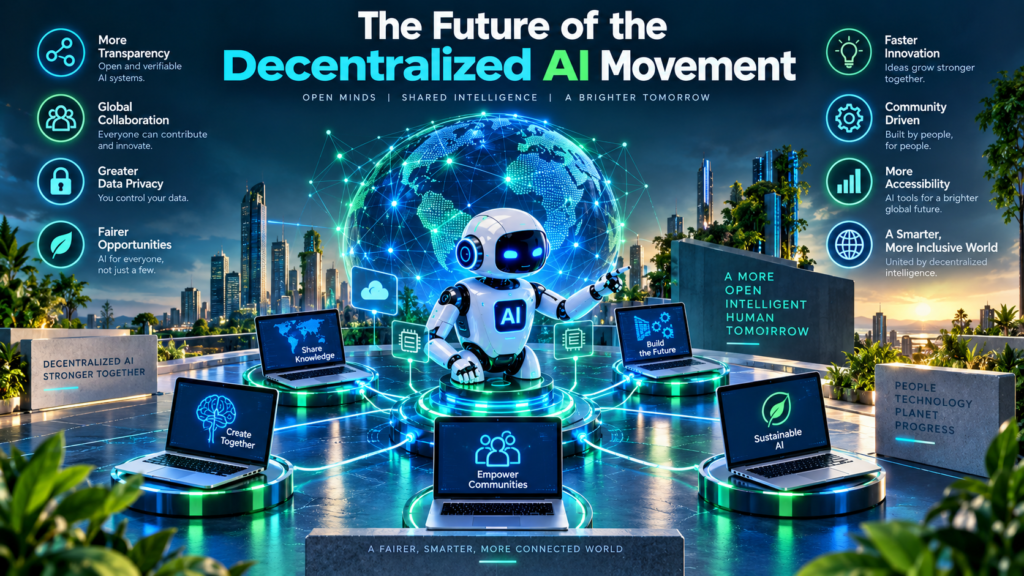
The Future of the Decentralized AI Movement
The future of the decentralized AI movement will likely involve a mixture of local, distributed, and centralized technologies. Smaller AI models are becoming easier to run on personal computers and specialized devices. Better networking and improved privacy methods may support more collaboration between organizations. At the same time, large centralized systems will remain important for demanding workloads. The most useful developments may come from combining different approaches rather than treating decentralization as a complete replacement for existing infrastructure. Progress will depend on technical improvements, responsible governance, and real user needs.
Researchers and developers are also exploring ways to improve trust in distributed AI systems. Better verification methods may help identify unreliable model outputs or dishonest contributions. Privacy-preserving techniques could support collaboration while reducing unnecessary data exposure. More accessible tools may allow smaller teams to participate in AI development. However, these improvements will not remove every limitation. Computing costs, security threats, and regulatory questions will continue to shape adoption. The decentralized AI movement has meaningful potential, but its long-term value will depend on practical results, transparent design, and responsible implementation.
Frequently Asked Questions
What is the decentralized AI movement?
The decentralized AI movement focuses on distributing AI development, computing, data, or decision-making across multiple participants. It explores alternatives to systems controlled entirely by one company. Common approaches include open-source models, federated learning, distributed computing, and peer-to-peer networks. The goal is to support greater participation, flexibility, and user control.
Is decentralized AI the same as blockchain AI?
No. Decentralized AI and blockchain AI are related but different concepts. Decentralized AI refers to distributing control or resources across participants. Blockchain AI describes projects that use blockchain technology alongside artificial intelligence. A decentralized AI system may not use blockchain, while a blockchain-based AI project may still depend on centralized infrastructure.
What are the main benefits of decentralized AI?
Potential benefits include greater flexibility, more control over data, open collaboration, and reduced dependence on a single provider. Some systems may also support local AI processing or shared computing resources. However, the benefits depend on the project’s design, security, performance, and operating costs. Decentralization does not guarantee better results.
Can decentralized AI improve privacy?
Decentralized AI can support privacy by keeping data on local devices or within individual organizations. Federated learning is one example of this approach. However, privacy depends on implementation. Model updates, storage systems, and network connections can still create risks. Strong security controls and careful data handling remain necessary.
How can beginners learn about decentralized AI?
Beginners can start by learning basic AI concepts, distributed computing, and data privacy. Exploring open-source AI projects can provide practical experience. It also helps to compare centralized and decentralized systems through simple examples. Before investing money or hardware, read technical documentation and test projects carefully. Focus on understanding the technology rather than following hype.
Conclusion
The decentralized AI movement is exploring new ways to build and use artificial intelligence. By distributing computing, data processing, and participation, it may offer greater flexibility and user control. Open-source models, federated learning, and peer-to-peer networks are important parts of this developing field. However, challenges involving security, cost, performance, and governance remain. Decentralized AI is not automatically better than centralized AI. Its value depends on the problem being solved and the quality of the implementation.
[…] Multimodal: Meaning, Examples, Benefits, and Uses Decentralized AI Movement: The Future of Artificial Intelligence AI vs AGI: Key Differences, Examples, and Future How Much Energy Does AI Use? A Simple […]