
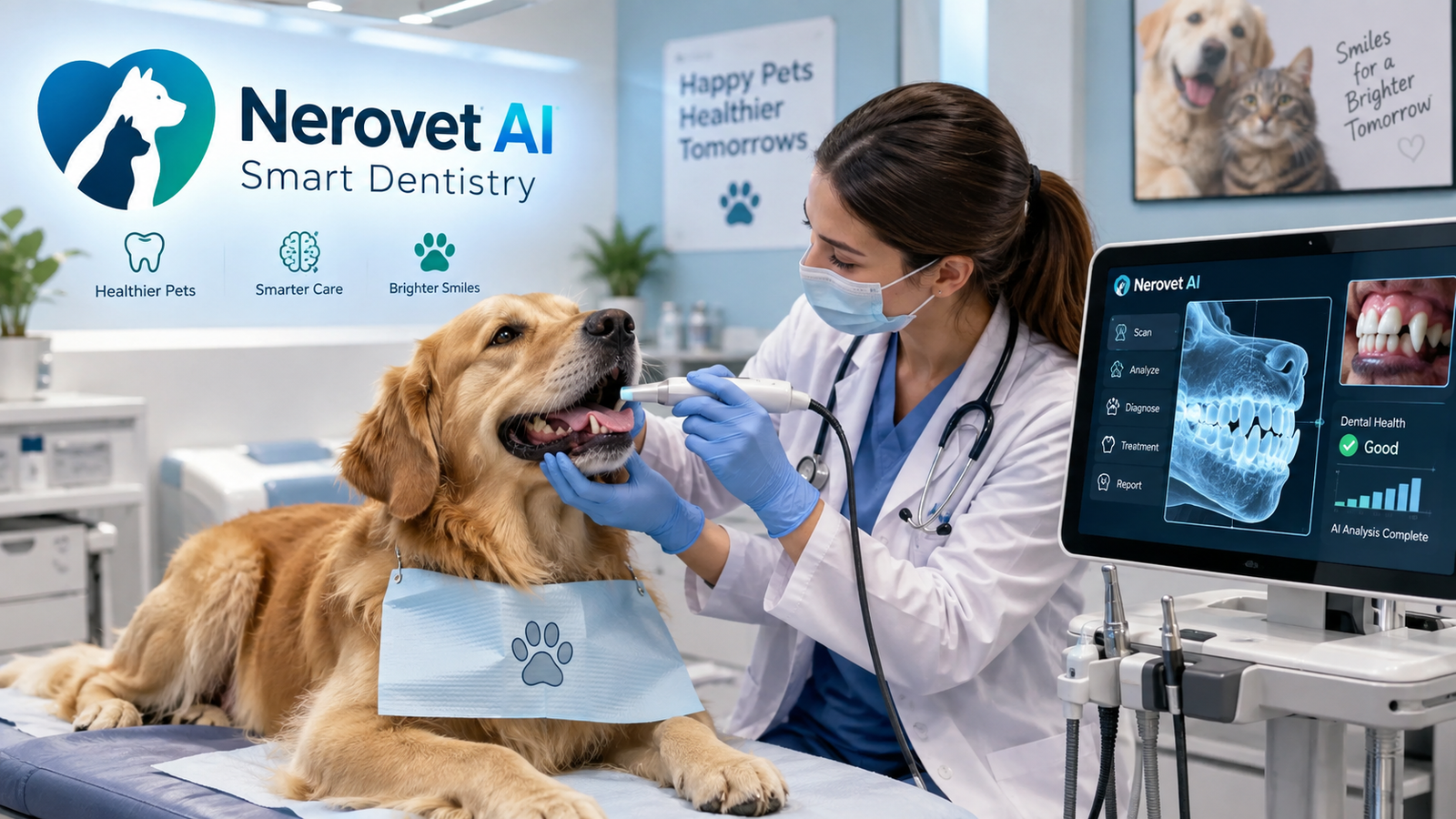
Nerovet AI Smart Dentistry: Pet Dental AI Guide

Nerovet AI Smart Dentistry is an emerging approach to pet dental care that uses artificial intelligence to examine dental images. Unlike human-focused dental software, Nerovet is designed mainly for dogs, cats, and veterinary clinics. It can help identify possible oral health problems from dental X-rays and images while giving veterinarians another layer of information during evaluation. The goal is simple: make dental screening faster, clearer, and easier to review. The technology may support early detection and visual reporting for communication with pet owners. However, AI should not replace a professional veterinary examination. A veterinarian should always interpret findings before making diagnosis or treatment decisions.
Interest in Nerovet AI Smart Dentistry comes from a common problem in veterinary medicine: pets cannot explain when their mouths hurt. Dental disease can develop quietly, and some problems may not be obvious during a basic visual check. AI image analysis can help draw attention to areas that deserve closer professional review. Nerovet is associated with detecting conditions such as periodontal disease, tooth resorption, root abscesses, and fractures. These capabilities make the platform relevant to veterinary dental workflows rather than ordinary human dentistry. However, users should treat AI results as supportive information. Veterinary examination, imaging expertise, and clinical judgment remain essential for safe and appropriate care.
How Nerovet AI Smart Dentistry Works
At its core, Nerovet AI Smart Dentistry applies artificial intelligence to veterinary dental images. A clinic can obtain dental X-rays or other suitable images and process them through the platform. The system can then analyze the images and highlight areas that may require closer attention. This approach can be useful when a busy clinic needs an additional review of dental images. The important point is that AI does not independently decide what treatment a pet needs. A veterinarian must interpret the findings alongside the animal’s history, examination, symptoms, and complete diagnostic information. This makes the technology a supporting tool rather than a replacement for professional veterinary care.
The workflow is easy to understand as a short sequence. First, the veterinary team captures suitable dental images. Next, the images are processed by the AI system. The software analyzes patterns that may indicate dental problems and presents its findings for review. Finally, the veterinarian considers those findings before deciding whether further examination, additional imaging, cleaning, extraction, or another treatment is appropriate. This process can make image review more organized. However, an AI-generated result is not automatically a confirmed clinical diagnosis. The veterinarian remains responsible for interpreting the available evidence and choosing appropriate care for each individual animal.
Nerovet AI Smart Dentistry workflow chart
| Stage | AI Technology | Veterinary Role |
|---|---|---|
| 1. Imaging | Processes dental images | Capture suitable images |
| 2. Analysis | Identifies possible abnormalities | Review highlighted areas |
| 3. Reporting | Presents visual findings | Compare with clinical evidence |
| 4. Decision | Provides supporting information | Make diagnosis and treatment decisions |
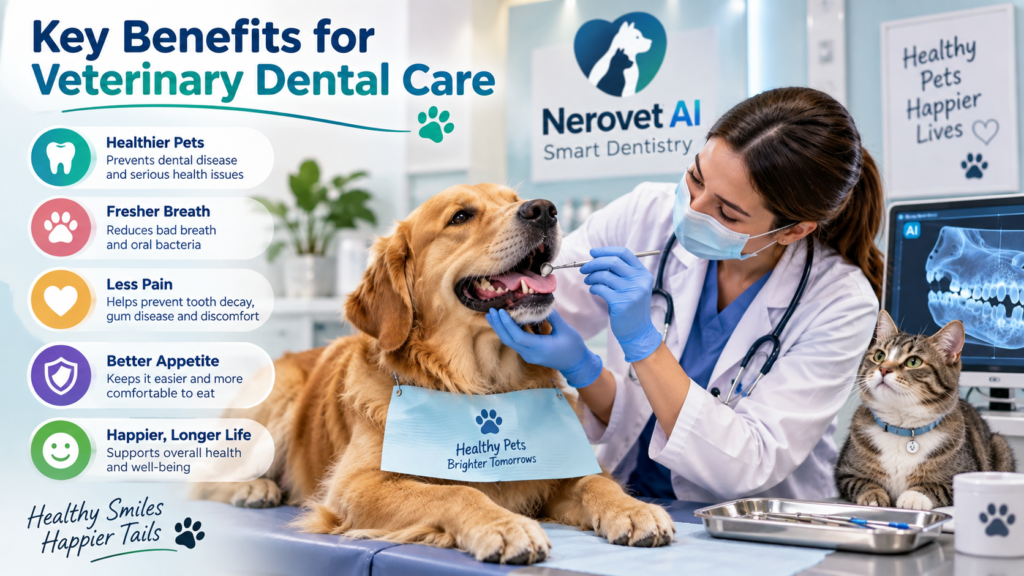
Key Benefits for Veterinary Dental Care
One potential benefit of Nerovet AI Smart Dentistry is faster image review. Veterinary dental cases can involve many teeth, roots, and surrounding structures, so automated analysis may help direct attention toward suspicious areas. The technology can also help identify problems that pet owners may not recognize at home. Dental conditions can sometimes develop without obvious external signs. Another possible benefit is communication. Visual reports may make dental findings easier to explain to owners who are unfamiliar with veterinary X-rays. This can support better conversations about treatment. However, these benefits depend on image quality, appropriate use, and professional interpretation rather than artificial intelligence working independently.
A useful way to view Nerovet AI Smart Dentistry is as an assistant within a veterinary workflow. It can add an automated review layer without removing the need for clinical experience. For example, imagine a cat receiving a dental examination. The veterinarian can review dental images, use AI analysis to flag a possible abnormality, and then inspect the relevant area more carefully. The AI finding can encourage closer attention, but it does not prove that disease is present. The same principle applies to dogs with suspected periodontal disease or fractures. The value comes from combining technology with veterinary knowledge, not from treating an automated result as the final answer.
Nerovet AI Smart Dentistry for Dogs and Cats
Nerovet AI Smart Dentistry is focused on veterinary dentistry rather than conventional human dental care. This distinction is important for anyone searching for information about the technology. The platform is intended for veterinary applications involving pets such as dogs and cats. It can support the analysis of dental X-rays and other relevant images. This makes it more appropriate for veterinary clinics than ordinary human dental practices. Before adopting any healthcare technology, veterinary teams should review its current documentation, supported image types, workflow requirements, privacy practices, and available evidence. Understanding these factors helps clinics decide how the technology could fit into their existing dental care process.
The difference between company claims and independently verified evidence should also remain clear. Technology providers may publish performance figures based on their own testing. Such figures should not automatically be interpreted as universal clinical accuracy. Performance can vary depending on image quality, patient type, disease prevalence, dataset design, and testing methods. For a veterinary practice considering Nerovet AI Smart Dentistry, useful questions include how the system was tested, what reference standard was used, how results were validated, and what limitations apply. Asking these questions supports responsible technology adoption and helps veterinary professionals develop realistic expectations about what AI can and cannot do.
Using Nerovet AI in a Veterinary Clinic
For veterinary clinics, Nerovet AI Smart Dentistry may fit into existing dental imaging workflows. A typical process could involve capturing high-quality dental images, processing them through the AI system, reviewing highlighted findings, comparing them with the original images, and documenting the veterinarian’s final assessment. This approach could help organize image review and make certain findings easier to discuss with pet owners. Clinics should also consider staff training, data handling, internet requirements, reporting features, and customer support. Technology works best when it supports an established clinical process rather than creating an additional disconnected task for veterinary teams.
Pet owners may also encounter Nerovet AI Smart Dentistry when researching ways to understand their animal’s dental health. However, owners should avoid treating AI as a substitute for veterinary care. A photograph or automated report cannot provide the same information as a complete veterinary assessment, particularly when dental X-rays, probing, anesthesia, or additional tests are needed. If a pet has persistent bad breath, difficulty eating, bleeding gums, loose teeth, facial swelling, or obvious mouth pain, professional veterinary attention is important. AI can support awareness and image review, but professional examination remains essential for understanding the cause and deciding what treatment may be appropriate.
Limitations and Accuracy of Nerovet AI
Like any AI-based medical technology, Nerovet AI Smart Dentistry has practical limitations. An AI system depends heavily on the quality and type of information it receives. Poor positioning, unclear images, missing views, unusual anatomy, or conditions outside the model’s training experience may affect results. AI can also highlight a suspicious area without explaining every clinical reason behind it. This is why veterinarians need to compare automated findings with examination results and the animal’s medical history. Another important consideration is evidence transparency. Public accuracy claims should be reviewed carefully before a clinic uses them to guide purchasing or workflow decisions. Careful evaluation helps prevent unrealistic expectations.
The strongest way to assess a platform like Nerovet is to combine published information with practical questions. Clinics can request a demonstration, review technical documentation, understand supported imaging formats, and learn how reports are generated. They can also ask how false positives and false negatives are handled. Another useful step is comparing AI findings with experienced veterinary dental interpretation during a controlled evaluation. This can provide a clearer picture of whether the tool fits a particular clinic. Veterinary teams should also consider cost, workflow time, data protection, staff acceptance, and technical support. A technology can appear useful but still be unsuitable if it does not integrate smoothly into everyday clinical practice.
The Future of Nerovet AI Smart Dentistry
The future of Nerovet AI Smart Dentistry will depend on how veterinary AI develops and how much clinical evidence becomes available. AI tools may become better at recognizing patterns, organizing dental findings, and producing clearer reports as models and datasets improve. Veterinary technology is also becoming increasingly focused on digital imaging and automated assistance. However, future progress should be measured through transparent testing rather than marketing language alone. For veterinary professionals, useful development means technology that fits naturally into clinical workflows while maintaining strong standards for accuracy, privacy, and professional oversight. The goal should be better-supported clinical decisions rather than replacing veterinary expertise.
For pet owners, the broader future is also interesting. Easier access to digital dental screening could help more people understand why regular oral care matters for dogs and cats. For clinics, AI may reduce repetitive image-review tasks and make dental findings easier to explain. Yet better technology does not remove the need for prevention, professional examinations, dental cleaning when recommended, and appropriate treatment. Nerovet AI Smart Dentistry should therefore be viewed as part of a larger veterinary care process. Its practical value will come from how well AI findings support real clinical decisions. Responsible use means keeping the veterinarian, the animal, and evidence-based care at the center.
Frequently Asked Questions
What is Nerovet AI Smart Dentistry?
Nerovet AI Smart Dentistry is an AI-based veterinary dental technology focused on analyzing pet dental images. It is designed for veterinary applications involving animals such as dogs and cats. The technology can support image review and help highlight possible dental abnormalities, but professional veterinary assessment remains necessary for diagnosis and treatment decisions.
Can Nerovet AI detect dental problems in pets?
Nerovet AI Smart Dentistry is designed to analyze dental images for possible abnormalities. These may include conditions such as periodontal disease, tooth resorption, root problems, and fractures. Any AI finding should be reviewed by a veterinarian because automated analysis provides supporting information rather than a confirmed diagnosis.
Is Nerovet AI designed for human dentistry?
No. Nerovet AI Smart Dentistry is focused on veterinary dental care rather than conventional human dentistry. Its intended applications involve pets, particularly dogs and cats. This makes it different from artificial intelligence systems developed specifically for human dental clinics and patient imaging.
How accurate is Nerovet AI Smart Dentistry?
The accuracy of any AI dental system depends on factors such as image quality, testing methods, patient cases, and clinical conditions. Published performance claims should therefore be reviewed alongside validation information. Veterinary professionals should evaluate the available evidence before relying on AI results in clinical workflows.
Can AI replace a veterinary dentist?
No. AI can help analyze images and highlight possible problems, but it cannot replace professional veterinary judgment. Veterinarians must consider symptoms, medical history, examination findings, image quality, and other evidence before making a diagnosis or treatment decision.
Conclusion
Nerovet AI Smart Dentistry shows how artificial intelligence can support modern veterinary dental care. Its focus is pet dental imaging, possible early detection, visual reporting, and workflow support for veterinary professionals. The technology may help teams review images more efficiently and explain possible findings more clearly. However, AI results should always be treated as supporting information rather than a final diagnosis. Veterinary examination, suitable imaging, clinical history, and professional judgment remain essential. For clinics considering this type of technology, careful evaluation of evidence, workflow fit, privacy, cost, and performance is important. For pet owners, regular professional dental care should remain the priority while AI develops as a supporting tool.
[…] Tavern AI: Complete Guide to AI Character Chats Nerovet AI Smart Dentistry: Pet Dental AI Guide Character Hub: Create, Share & Explore Characters Perchance NSFW: What It Is and How […]