

Vidqu AI: Features, Pricing, and How It Works

Vidqu AI is a search term used by people looking for artificial intelligence video creation tools. However, the name needs clarification because several similarly named platforms exist. VidIQ offers AI-powered YouTube content creation, while Vidu AI focuses on generating and editing videos. VidQ is another platform for creating movie and television reels. These services have different features, pricing, and purposes. Understanding the difference helps you choose the right tool for your project. This guide explains the available information about Vidqu AI, including its possible meaning, video generation features, pricing considerations, and practical uses. The goal is to provide clear information without confusing similar platforms.
If you searched for Vidqu AI because you want to create videos, the first step is identifying the platform you mean. The spelling matters because similar names can lead to different websites and applications. VidIQ is designed around YouTube growth and content planning. Vidu AI provides generative video tools, including text-to-video and image-to-video features. VidQ focuses on movie and television reels. These services have different purposes and workflows. This article uses the keyword Vidqu AI while explaining these distinctions clearly. That approach helps readers avoid confusing one service with another and makes it easier to find the correct platform for their needs.
Vidqu AI Meaning and Platform Differences
The term Vidqu AI does not clearly identify one established AI video platform. Instead, it may refer to a spelling variation or a mix-up involving VidIQ, Vidu AI, or VidQ. Each platform serves a different audience. VidIQ helps creators plan, optimize, and produce YouTube content. Vidu AI creates video clips from prompts and images. VidQ turns movie and television content into social media reels. Checking the website address before signing up is important. It prevents users from choosing the wrong service or entering payment information on an unrelated platform.
For example, someone searching for AI-generated videos may actually need Vidu AI. A YouTube creator researching titles, scripts, and thumbnails may need VidIQ instead. Someone making entertainment reels may prefer VidQ. These differences affect the workflow, output, and pricing model. Therefore, there is no single feature list or confirmed price that can accurately describe every service associated with the Vidqu AI keyword. The following sections explain the closest known platforms separately. This gives readers practical information without presenting unconfirmed features as facts about a product whose exact identity remains unclear.
VidIQ AI: YouTube Content Creation
VidIQ is an AI-powered platform built for YouTube creators. Its AI content generator can help users develop video titles, descriptions, scripts, thumbnail ideas, and voice-over previews. These features support the planning stage before recording or editing. Instead of beginning with a blank document, creators can enter a topic and receive a starting content package. The results still need review because generated text may require corrections, better examples, or a more personal style. VidIQ also provides a separate AI video generator for creating video clips from written prompts.
VidIQ’s AI tools are useful for creators who want a repeatable content workflow. A person could enter a topic such as beginner photography and generate a possible title, outline, script, and thumbnail concept. They could then check the accuracy of the information and adjust the script for their audience. The platform also provides tools for YouTube optimization and creator analytics. These features are different from a general-purpose video editor because they focus on content ideas, packaging, and audience discovery. The final quality still depends on the creator’s topic, originality, and editing decisions.
VidIQ AI Video Generator Features
VidIQ’s AI video generator creates video clips from text prompts. Users describe the scene, choose a duration, and select a format. The feature supports vertical and landscape video creation, with clip lengths depending on the selected model. It also supports remixing existing videos by uploading a video and describing the desired changes. This can help creators test different visual ideas quickly. However, short generated clips may need to be combined, reviewed, and edited before becoming a complete video. The tool is designed for YouTube content rather than replacing every part of professional production.
The video generator is useful for short demonstrations, visual hooks, and creative experiments. For instance, a creator could describe a futuristic city, a product animation, or a short educational scene. The generated result can then be reviewed for movement, framing, and consistency. VidIQ’s feature information describes 4-second, 6-second, and 8-second options, while other models may support longer clips. The exact available duration and credit cost can change. Users should check the current interface before planning a large project around a particular output length or generation limit.
Vidu AI: Text-to-Video and Image-to-Video
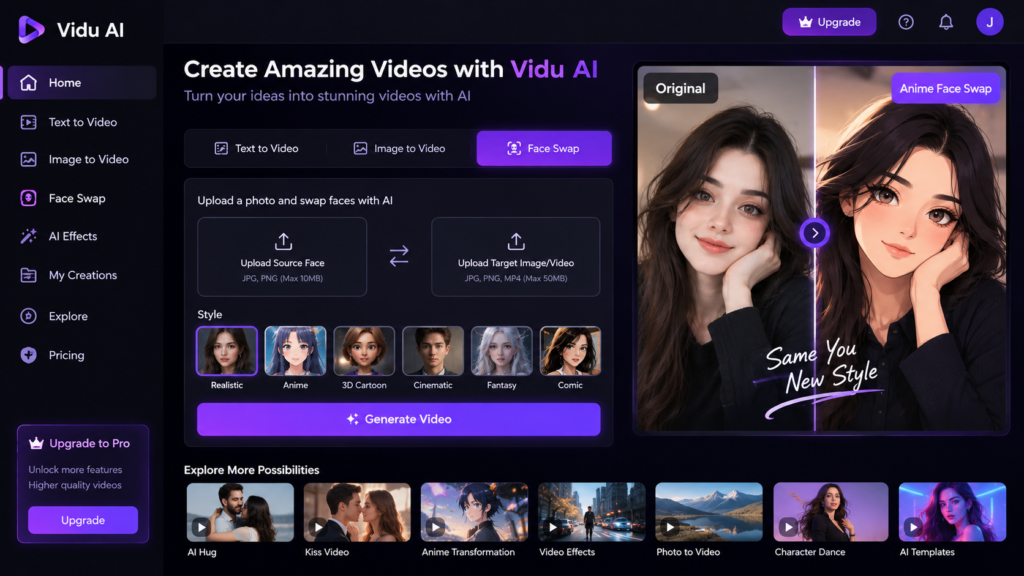
Vidu AI is a separate generative video platform that creates videos from text, images, and other references. Its tools include text-to-video, image-to-video, and start-end-to-video capabilities. Users can create motion from a still image or describe a scene using written instructions. The platform also provides different models and resolutions. These features make Vidu AI relevant to people searching for AI video generation under a similar name. However, Vidu AI should not be treated as the same service as VidIQ or VidQ. Each platform has its own account system, tools, and pricing structure.
Vidu AI’s recent updates include models for interactive characters and real-time video editing. These models support features such as real-time voice interaction, motion control, clothing replacement, character replacement, and background replacement. Such capabilities are relevant to creators working with digital characters, advertisements, and visual storytelling. The actual result depends on the input, model, and generation settings. Users should test a small project first rather than assuming every reference image or video will produce perfect results. Reviewing generated content is important before using it in a finished production.
VidQ AI Reel Maker for Social Media
VidQ is another platform with a similar name. It provides a service for creating movie and television reels. The platform offers reel generation, downloadable video assets, thumbnails, and caption packs. Its Studio plan also supports publishing to multiple connected social media channels. This makes VidQ relevant to users who want entertainment-focused short-form content. It is not the same as VidIQ’s YouTube optimization platform or Vidu AI’s generative video models. Identifying the exact service is therefore essential before comparing features, subscription costs, or publishing options.
VidQ offers different subscription levels for creators and teams. Its listed plans include Creator, Pro, and Studio. The platform describes monthly reel allowances, batch creation, branding options, and connected social media publishing. It also advertises a three-day free trial without requiring a card. These details are specific to VidQ and should not be applied to VidIQ or Vidu AI. Pricing and availability may change, so readers should verify the current plan details before subscribing.
Vidqu AI Features Comparison Chart
The following chart compares the three similarly named platforms. It separates known features from the broader Vidqu AI search term. This helps readers understand which service may match their intended use. The chart does not claim that all three platforms belong to one company or share the same technology. Instead, it presents their documented purposes and major capabilities. Users should confirm the exact website before creating an account. This is especially important when comparing subscription plans, generation credits, and video export options because those details differ between services.
| Feature | VidIQ | Vidu AI | VidQ |
|---|---|---|---|
| Main purpose | YouTube content creation and optimization | AI video generation and editing | Movie and TV reel creation |
| Text-to-video | Available through AI video generator | Available | Reel-focused workflow |
| Image-to-video | Not the main documented feature | Available | Not the main documented feature |
| AI scripts | Available | Not the main documented feature | Caption packs |
| Thumbnail ideas | Available | Not the main documented feature | Available for reels |
| Social publishing | YouTube-focused tools | Platform-dependent | Multi-platform publishing |
| Pricing model | Plans and AI credits | Credit-based generation | Monthly reel plans |
The chart shows why a single Vidqu AI feature list would be misleading. VidIQ is centered on content planning and YouTube growth, while Vidu AI focuses on generated video content. VidQ is built around entertainment reels and publishing workflows. A creator making educational videos may need scripting and optimization tools. Someone creating animated scenes may need text-to-video or image-to-video generation. A movie page may need reel production and captions. Choosing the right platform begins with the intended task, not simply the similarity of the names.
Vidqu AI Pricing and Free Options
There is no single verified pricing plan for Vidqu AI because the exact platform is unclear. VidIQ offers free access to some AI content tools and uses credit-based pricing for its video generator. Vidu AI also uses credits, with costs depending on the model, duration, and resolution. VidQ lists monthly subscription plans for reel creation. These are separate pricing systems. A price from one platform should never be presented as the price of another. Checking the official pricing page is the safest way to confirm current costs before purchasing.
When comparing AI video tools, users should look beyond the advertised monthly price. Important details include the number of generation credits, maximum video length, output resolution, watermark rules, and commercial-use terms. Some services charge credits for every generated clip, while others use monthly production limits. A free plan may also restrict export quality or available features. For beginners, testing a free option can reveal whether the tool fits their workflow. For frequent creators, the cost per usable video may matter more than the headline subscription price.
How to Choose the Right AI Video Tool
Start by deciding what type of video you want to create. If your goal is YouTube research, scripts, titles, and content planning, VidIQ is the relevant platform to investigate. If you want to generate animated scenes from prompts or images, Vidu AI is the more relevant option. If you want movie and television reels for social media, VidQ may match your needs. This simple distinction can save time and reduce confusion. It also helps you compare the features that actually matter for your project instead of choosing based on a similar brand name.
After choosing a platform, test it with a small project. Write a clear prompt, select an appropriate format, and review the output carefully. Check whether the movement looks natural, the text is accurate, and the result matches your intended audience. For YouTube content, review the script and claims before publishing. For generated video, inspect faces, hands, objects, and scene transitions. For reels, check captions and platform formatting. A short trial gives you useful evidence about quality, cost, and workflow before you invest in a larger content project.
Practical Uses of Vidqu AI-Related Tools
AI video tools can support several content creation tasks. A YouTube creator may use VidIQ to develop a video idea, prepare a script, and create thumbnail concepts. A designer may use Vidu AI to turn a still image into a moving scene. A movie page may use VidQ to produce short entertainment reels and captions. These examples show how different platforms can fit different workflows. The tools can reduce repetitive work, but they do not remove the need for planning, editing, and quality checks. Human judgment remains important throughout the process.
For example, imagine a creator preparing a short video about smartphone photography. VidIQ could help organize the topic into a title, script, and thumbnail idea. Vidu AI could create a visual scene showing a phone camera capturing a sunset. The creator could then combine the generated clip with accurate explanations and original commentary. This workflow uses AI for support rather than copying another creator’s content. It also makes room for fact-checking, personal experience, and useful editing. The final video should provide real value instead of relying only on automated visuals.
Important Things to Check Before Using AI Video Tools
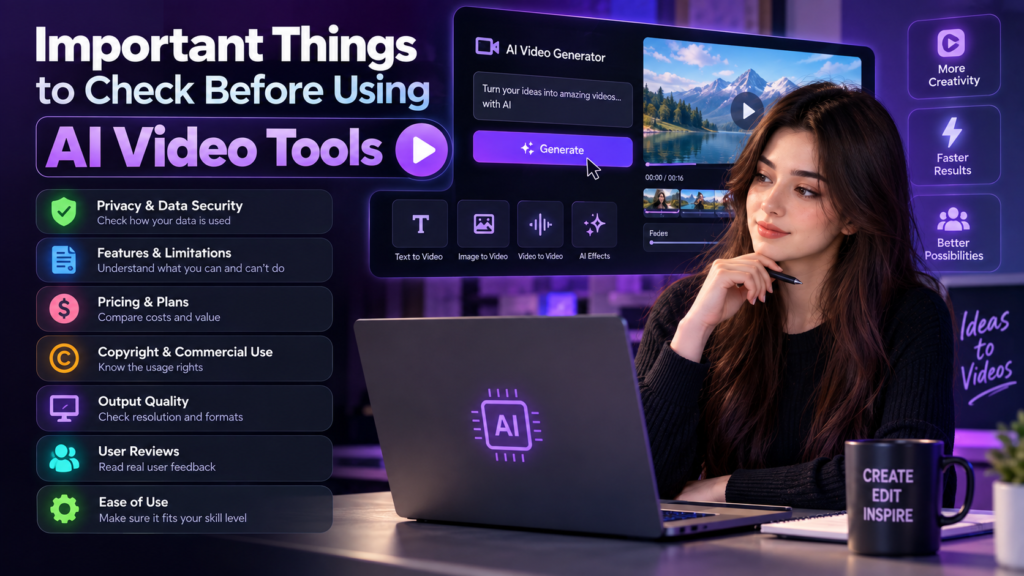
Before uploading images or videos, read the platform’s privacy and usage terms. This is especially important when working with personal photographs, customer materials, or copyrighted footage. Users should understand how uploaded content may be processed and whether generated results can be used commercially. The exact rules differ between platforms. A tool that creates a video does not automatically grant permission to use every input image, song, or character. Checking the relevant terms helps prevent avoidable problems when publishing content on websites or social media.
Quality control is also important because AI-generated videos can contain visual or factual mistakes. A face may change between frames, text may appear incorrectly, or an object may move unnaturally. Generated scripts can also include unsupported claims. Creators should review every output before publishing. For YouTube, original value and accurate information remain important parts of responsible content creation. AI tools can support production, but they should not replace careful editing or honest communication with viewers.
Related AI Tools for Content Creators
Readers interested in AI content creation may also explore related topics such as AI video generators, YouTube AI tools, and AI thumbnail makers. These topics cover different parts of the content workflow. A video generator creates visual material, while a thumbnail maker focuses on packaging and presentation. YouTube AI tools may support research, scripting, and optimization. Understanding these categories makes it easier to select tools based on a specific task. It also helps creators avoid expecting one platform to perform every production function.
For a broader understanding of AI content creation, readers can also explore how to make money with AI and AI video editing tools. These related subjects explain how creators can organize production, improve efficiency, and build useful content workflows. However, earning money from AI-generated content depends on the quality of the work, audience demand, platform rules, and applicable rights. No tool can guarantee views, subscribers, or income. A practical approach is to test ideas, improve the content, and measure results over time.
Frequently Asked Questions
What is Vidqu AI used for?
Vidqu AI is a search term associated with several similarly named AI video platforms. Depending on the intended service, it may refer to YouTube content creation, generative video production, or movie and television reels. Check the exact website name before choosing a tool or subscription.
Is Vidqu AI free?
There is no single confirmed free plan for Vidqu AI. VidIQ, Vidu AI, and VidQ have different access and pricing models. Some offer free tools or trials, while others use credits or monthly subscriptions. Check the official pricing page for current details.
Can Vidqu AI create videos from text?
Text-to-video creation is available through VidIQ’s AI video generator and Vidu AI. VidQ focuses on movie and television reels. Because the keyword is ambiguous, confirm which platform you mean before assuming a specific video generation feature is available.
Which platform is better for YouTube videos?
VidIQ is designed specifically for YouTube content planning, optimization, and AI-assisted video creation. Vidu AI is focused on generated video content. The appropriate choice depends on whether you need YouTube research and scripts or visual video generation.
Can AI-generated videos be monetized?
AI-generated videos may be eligible for monetization when they follow platform rules and provide meaningful original value. Creators should review current YouTube policies, disclose synthetic content when required, and avoid publishing copied or misleading material.
Conclusion
Vidqu AI is an ambiguous search term that may refer to VidIQ, Vidu AI, or VidQ. These platforms serve different purposes, from YouTube content planning to AI video generation and entertainment reels. VidIQ offers AI-assisted scripts, titles, thumbnails, and video creation. Vidu AI provides text-to-video and image-to-video tools. VidQ focuses on movie and television reels. Before signing up, confirm the exact platform and review its current features, pricing, and usage terms. The best results come from choosing a tool that matches your project, reviewing generated content carefully, and adding original value to every video.
[…] Nectar AI: Complete Guide to Features, Pricing and Safety in 2026 Vidqu AI: Features, Pricing, and How It Works Perplexity Browser: Features, Download, and Latest Updates Anthropic vs OpenAI: Which AI […]